Recognizing the Signs of Improper Drip Edge Installation on Asphalt Shingle Roofs
Oct 24, 2026
Looking Past the Leaves: The Hidden Threat Behind Your Gutters
As the leaves begin to drop this October in Hanover, PA, recognizing the signs of improper drip edge installation on asphalt shingle roofs is just as important as clearing out your gutters. Before the heavy autumn rains set in, you need to know if your home is truly protected. If you want to understand how our team at CR3 American Exteriors evaluates these critical details, you can review our process for replacing an existing roof.
Every autumn, homeowners pull out their ladders, grab their gloves, and spend their weekends pulling damp leaves and pine needles out of their gutters. It is a necessary seasonal chore, but in our experience, it often creates a false sense of security. You might look down a perfectly clear aluminum trough and assume your roof drainage system is working exactly as intended. However, the most critical part of that system is not the gutter itself—it is the subtle transition point where the roof meets the edge of your home.
The Vulnerable Transition Zone
Water should flow seamlessly from your asphalt shingles directly into the center of the gutter. It sounds simple, but our roofing experts know that achieving that perfect flow requires precise metalwork right at the roofline. When a drip edge is missing, cut too short, or angled incorrectly, water does not bridge the gap. Instead, it finds its way behind the gutter, quietly soaking into the wood that holds your roof together.
The transition into mid-fall brings predictable, heavy precipitation that tests the absolute limits of your roof drainage systems. During a light summer drizzle, an improper drip edge might only leak a few drops. But when heavy autumn rains arrive, those minor flaws turn into a steady stream of water directed right at your home’s structural framing. Diagnosing this concrete problem early during a pre-winter inspection is the only way to prevent severe roof deck and fascia compromise.
The Science of a Failing Roof Edge: Understanding Capillary Action
To understand why a poorly installed metal edge causes so much destruction, you have to look at the physical mechanics of water flow. Most people assume that water always flows straight down due to gravity. While that is generally true, water also has a sticky quality called surface tension. This property leads to a phenomenon known as capillary action, which is the primary reason why roof leaks happen and what to do about them becomes a major concern for homeowners with failing roof edges.
How Surface Tension Defeats Gravity
Capillary action allows water to defy gravity by clinging to surfaces and drawing itself upward and backward into tight spaces. When rainwater rolls off the edge of an asphalt shingle, it naturally wants to wrap around the underside of that shingle. If there is no properly angled metal drip edge to break that surface tension and force the water to drop, the moisture wicks backward. It travels up the underside of the shingle, soaking the roof underlayment, the wooden roof deck, and the fascia board.
The Building Code Mandate
Because capillary action is so destructive, the 2012 International Residential Code (IRC) specifically mandated drip edges on all asphalt shingle roofs under Section R905.2.8.5. Our installation crews treat this not as an optional upgrade, but as a strict requirement for a structurally sound home. For a drip edge to function correctly, the asphalt shingles must overhang the metal edge by exactly 3/8 to 1/2 inch. This specific measurement creates a physical break in the surface tension, forcing the water to drop cleanly into the gutter.
| Installation Scenario | Water Flow Path | Impact on Fascia Board |
|---|---|---|
| Proper Drip Edge (1/2″ Overhang) | Water drops cleanly into the center of the gutter. | Remains dry and protected year-round. |
| Missing Drip Edge | Water wraps under shingles via capillary action. | Absorbs constant moisture, leading to rapid rot. |
| Shingles Cut Too Short | Water runs down the face of the metal edge behind the gutter. | Water pools against the wood, degrading paint and fibers. |
When a roof lacks this precise integration, the edge acts as a funnel. Instead of shedding water away from the house, it channels heavy autumn rains directly into the vulnerable wooden components of your roof deck.
Visual Red Flags: Peeling Paint and Dark Water Stains
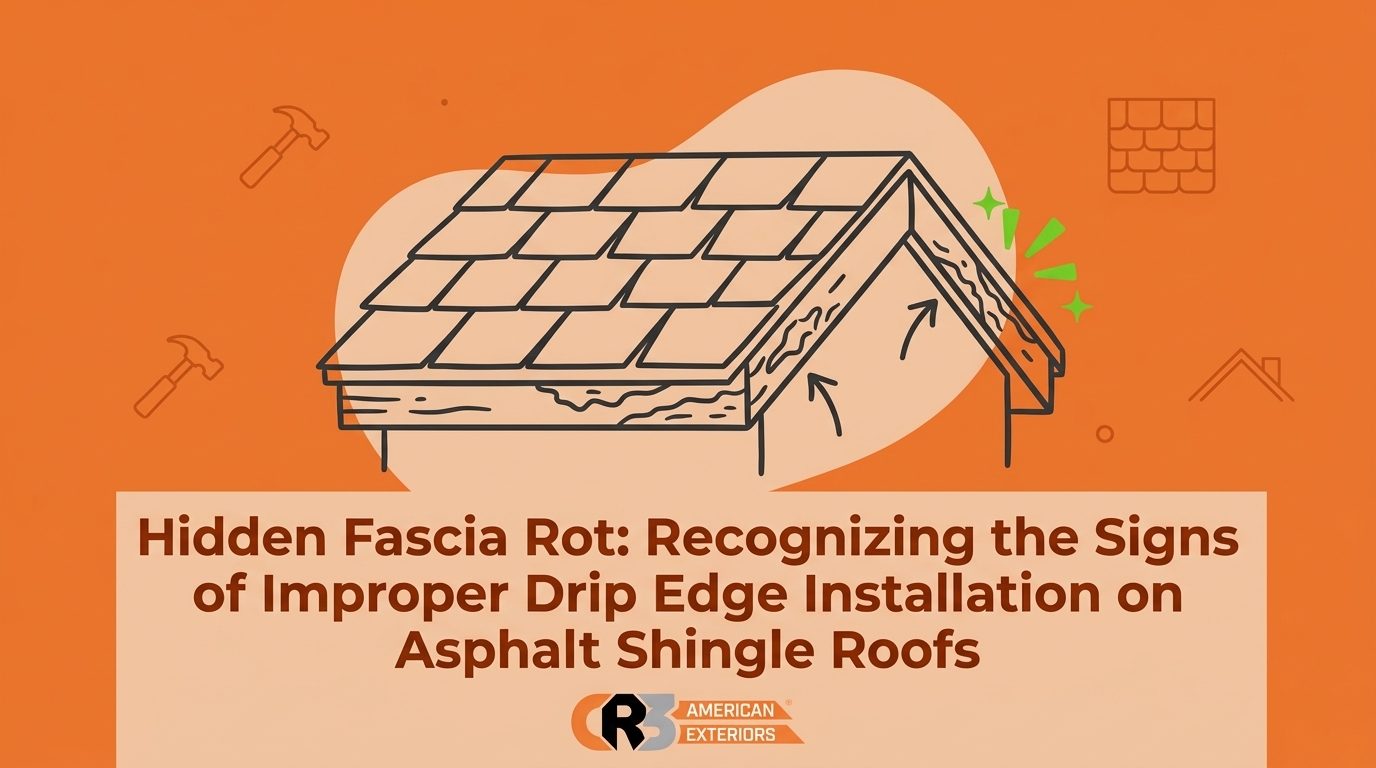
You do not need to be a structural engineer to spot a failing roof edge. The best time to inspect your home for these issues is right now, while you are already up on the ladder clearing out October’s leaf drop. If you know what to look for, you can easily spot hidden fascia rot during routine fall gutter inspections.
What to Look For While on the Ladder
In our years of conducting fall maintenance inspections, we consistently see that the back of the gutter and the fascia board are the first casualties of capillary action. Because this area is shadowed by the gutter itself, the damage is incredibly hard to spot from the ground. You have to get at eye level with the roofline to see the early warning signs.
- Dark water stains: Look for vertical black or brown streaks running down the fascia board directly behind the gutter. This indicates that water is consistently flowing behind the metal rather than into the trough.
- Peeling or bubbling paint: Paint adheres poorly to wet wood. If you see peeling paint and dark water stains on fascia boards, moisture has already penetrated the wood fibers and is pushing the paint away from the inside out.
- Discolored soffits: Check the underside of the roof overhang (the soffit). If water is wicking backward into the roof deck, it will eventually drip down onto the soffit panels, leaving rusty or dark circular stains.
- Rusted gutter fasteners: When the wood behind the gutter is constantly saturated, the screws or nails holding your gutters in place will begin to rust prematurely.
The takeaway: Peeling paint is never just a cosmetic issue when it happens at the roofline. It is a blaring alarm that your roof edge is actively taking on water, and the structural wood is beginning to degrade.
Advanced Warning Signs: Soft Wood and Exterior Wall Runoff
If the early visual signs are ignored, the problem progresses rapidly. Wood can only absorb so much moisture before it begins to break down at a cellular level. What starts as a minor aesthetic issue quickly evolves into a serious structural liability that threatens the entire exterior envelope of your home.
When Fascia Boards Turn to Sponge
Whether our crews are inspecting homes across Huntersville, Concord, Mooresville, Salisbury, Charlotte, Kannapolis, and Cornelius, NC, or dealing with the heavy downpours common to Ocala, The Villages, Gainesville, Leesburg, Wildwood, Lady Lake, and Hernando, FL, we always warn homeowners about persistent moisture. It turns solid, load-bearing fascia boards into soft, rotting wood. Your gutters are surprisingly heavy, especially when they are full of heavy autumn rains or wet leaves. They rely on the structural integrity of the fascia board to stay anchored to the house. When that wood rots, the fasteners lose their grip. You might notice your gutters beginning to sag, pull away from the house, or tilt forward. This is a clear indicator that the wood behind them has lost its structural strength.
The Domino Effect on Your Exterior Walls
Once the fascia is completely saturated, the water has to go somewhere. The problem moves from the roofline down the side of your house. Water will begin to run down your exterior siding, brickwork, or stucco. This constant wash of moisture can lead to a host of secondary issues.
- Window frame rot: Water running down the siding often pools at the top of window casings, leading to expensive rot around your window frames.
- Siding degradation: Constant moisture can cause wood siding to warp, vinyl siding to accumulate severe mold, and masonry to suffer from efflorescence (white, chalky salt deposits).
- Foundation pooling: When water bypasses the gutter entirely and runs down the wall, it pools directly at your foundation line, increasing the risk of basement leaks and structural settling.
Spotting soft wood or exterior runoff means the structural integrity of the roof edge is actively being compromised. At this stage, you must protect your home from the top down with gutter solutions and professional roof edge repairs before the rot spreads into the main trusses of your attic.
Roof-Level Symptoms: Curling Shingles and Misaligned Edges
The damage caused by an improper drip edge isn’t limited to the wood below; it also affects the asphalt shingles above. The shingles right at the edge of your roof—known as the starter strip—take the brunt of the abuse when moisture gets trapped in the transition zone.
The Drooping Shingle Effect
A pattern we see often is that when a drip edge is missing entirely, there is no rigid metal support for the shingles as they extend past the roof deck. Over time, gravity and heat cause these unsupported shingles to droop or bend sharply over the fascia board. This creates a rounded edge that practically invites water to wick backward into the wood. Inspecting the alignment of the shingle overhang provides immediate clues to the drip edge’s condition. The edge should look crisp, straight, and rigid.
Trapped Moisture and Blistering
Trapped moisture at the roof edge can also cause the starter shingles to curl upward or blister. As the damp wood beneath the shingles heats up in the afternoon sun, the moisture tries to evaporate, pushing up against the underside of the asphalt. This constant cycle of soaking and baking warps the shingles, breaking their seal and making them highly susceptible to catching the wind during a storm.
A crucial warning: Diagnosing these roof-level symptoms should always be done visually. We highly recommend that you never attempt to lift, bend, or manipulate the shingles yourself to check underneath them. Breaking the factory seal on your shingles can easily void your manufacturer warranty and create a brand new leak. If you see drooping or curling at the edges, it is time to have a professional spot a bad roofing job.

A Race Against the Freeze: How Regional Climates Accelerate Damage
The immediate issue of fall rain wicking behind your gutters is stressful enough, but it is actually just the precursor to a much more severe threat. As we move deeper into autumn, the clock is ticking. The trapped moisture soaking into your fascia boards today will become a massive liability when the temperatures finally drop below freezing.
The Mechanics of an Ice Dam
When you live in service areas prone to abrupt seasonal changes—like Columbus, Dublin, Grove City, Reynoldsburg, Hilliard, Westerville, and Gahanna, OH, or Hunt Valley, MD—the transition from heavy autumn rains to freezing winter precipitation happens fast. If your roof edge is already compromised by a missing drip edge, it becomes highly susceptible to destructive ice dams.
An ice dam forms when heat escapes from your attic, melting the snow on the upper parts of your roof. The water runs down toward the gutter, but because the roof edge extends past the heated walls of the house, that edge is freezing cold. The water refreezes right at the gutter line, creating a solid block of ice. If your drip edge is improperly installed, there is nothing stopping that expanding ice from driving straight backward under your shingles and into your home.
Specific regional weather patterns make proper installation non-negotiable. Whether you are dealing with the constant wet-dry cycles in coastal areas or the harsh freeze-thaw cycles further north, addressing fascia rot before winter begins is absolutely vital. Once a freeze sets in, a saturated fascia board will expand and crack, accelerating the structural failure of the roofline.
Why Meticulous Installation is the Only Long-Term Fix
When homeowners discover missing drip edges, their first instinct is often to look for a quick patch. However, retrofitting or repairing a roof edge requires strict professional standards and specialized knowledge. This is never a DIY fix.
The Danger of DIY Retrofits
Proper installation involves precise angles, exact overhang measurements, and careful integration with the ice and water shield underlayment. It is not just about sliding a piece of sheet metal under the existing shingles. Attempting to pry up sealed shingles to jam a metal edge underneath will almost certainly tear the asphalt matting and permanently void your roofing warranty. The entire perimeter of the roof must be handled with extreme care to ensure the waterproof envelope remains intact.
Holding Your Roofing Contractor Accountable
True roofing professionals sweat the unseen details to protect your home’s envelope. A beautiful layer of architectural shingles means nothing if the edge details are neglected. That is why working with a team that values accountability is so important. At CR3 American Exteriors, we believe in honest, meticulous installation standards, whether we are working in Hanover, PA, or coastal areas like Jupiter, Palm Beach Gardens, and West Palm Beach, FL. Our strict workmanship guarantee is proof of our commitment to getting the unseen details exactly right, ensuring that every component of your roof functions as a cohesive system.
Do not let a minor installation flaw turn into a major structural repair. If you are seeing the warning signs, it is time to bring in a professional who understands the science of a failing roof edge and knows how to correct it permanently.
Frequently Asked Questions
What happens if a drip edge is installed incorrectly?
When a drip edge is installed incorrectly, it fails to direct water cleanly into the gutter. Instead, surface tension pulls the water backward under the shingles, a process known as capillary action. This trapped moisture slowly rots the wooden roof deck, the fascia board, and can eventually cause leaks inside your attic or exterior walls.
Why is water dripping behind my gutters?
Water dripping behind your gutters is almost always a sign of a missing, too short, or improperly angled drip edge. Without the proper metal overhang to break the surface tension, rainwater rolls down the face of the fascia board rather than dropping into the gutter trough. Over time, this constant flow of water will cause the paint to peel and the wood to rot.
How do I know if my fascia board is rotting?
The earliest signs of fascia rot include peeling, bubbling paint and dark vertical water stains directly behind the gutter line. As the rot progresses, the wood will feel soft or spongy to the touch, and your gutters may begin to sag or pull away from the house because the screws can no longer grip the deteriorating wood.
Can you fix a bad drip edge without replacing the roof?
Yes, a professional roofer can often retrofit or repair a bad drip edge without replacing the entire roof, but it requires specialized care. The technician must carefully unseal the starter shingles, install the proper metal flashing, integrate it with the underlayment, and reseal the edge without damaging the existing asphalt shingles.
How far should asphalt shingles overhang the drip edge?
According to standard building practices and roofing manufacturer guidelines, asphalt shingles should typically overhang the metal drip edge by 3/8 to 1/2 inch. This specific distance creates a physical gap that forces rainwater to drop directly into the gutter, effectively preventing water from wicking backward under the roofline.
Protect Your Roof Edge Before Winter Arrives
Recognizing the signs of improper drip edge installation on asphalt shingle roofs is the first step in protecting your home from hidden water damage. If you notice peeling paint, dark stains, or soft wood while clearing your gutters this fall, do not wait for the winter freeze to make it worse. Reach out to our team at CR3 American Exteriors for a professional inspection today to ensure your roof edge sheds water perfectly, giving you total confidence in your home’s exterior.