Aluminum vs. Vinyl Soffits: Preventing Wind-Driven Rain Intrusion During Florida Autumn Storms
Oct 26, 2026
The Hidden Vulnerability in Your Eaves: Why Material Choice Matters
At CR3 American Exteriors, a common myth we hear among homeowners is that eaves and overhangs are merely decorative vents designed to let the attic breathe. In reality, as our team often explains during consultations, when you are evaluating Aluminum vs. Vinyl Soffits: Preventing Wind-Driven Rain Intrusion During Florida Autumn Storms, you quickly discover that these barriers are a critical structural defense. During a severe weather event, your soffits act as the frontline shield keeping horizontal moisture out of your home’s vulnerable upper cavities.
As October late-season tropical moisture rolls in, the atmospheric conditions shift dramatically. High winds associated with these coastal systems do not just blow rain down onto your roof; they push heavy sheets of water upward and sideways, directly targeting the underside of your eaves. Choosing the right material for this barrier is one of the most effective ways to protect your home from storm damage before severe weather strikes.
This creates a significant decision point for homeowners: balancing the superior structural rigidity of aluminum against the upfront cost-effectiveness of vinyl. When inferior materials flex, bow, or separate under sustained gusts, the resulting water intrusion can devastate an attic space in a matter of hours. Understanding the structural risks of soffit damage allows you to make a proactive, weather-appropriate choice that safeguards your property for years to come.
Understanding the Mechanics of Wind-Driven Rain Intrusion
In our years of inspecting storm-damaged properties, we have found that to truly grasp why material rigidity matters, you have to look at the physics of how a coastal storm attacks a house. Florida autumn storms wind-driven rain intrusion is not a matter of simple gravity; it is a complex aerodynamic process driven by intense pressure changes around the building envelope.
Aerodynamic Uplift and Eave Vulnerability
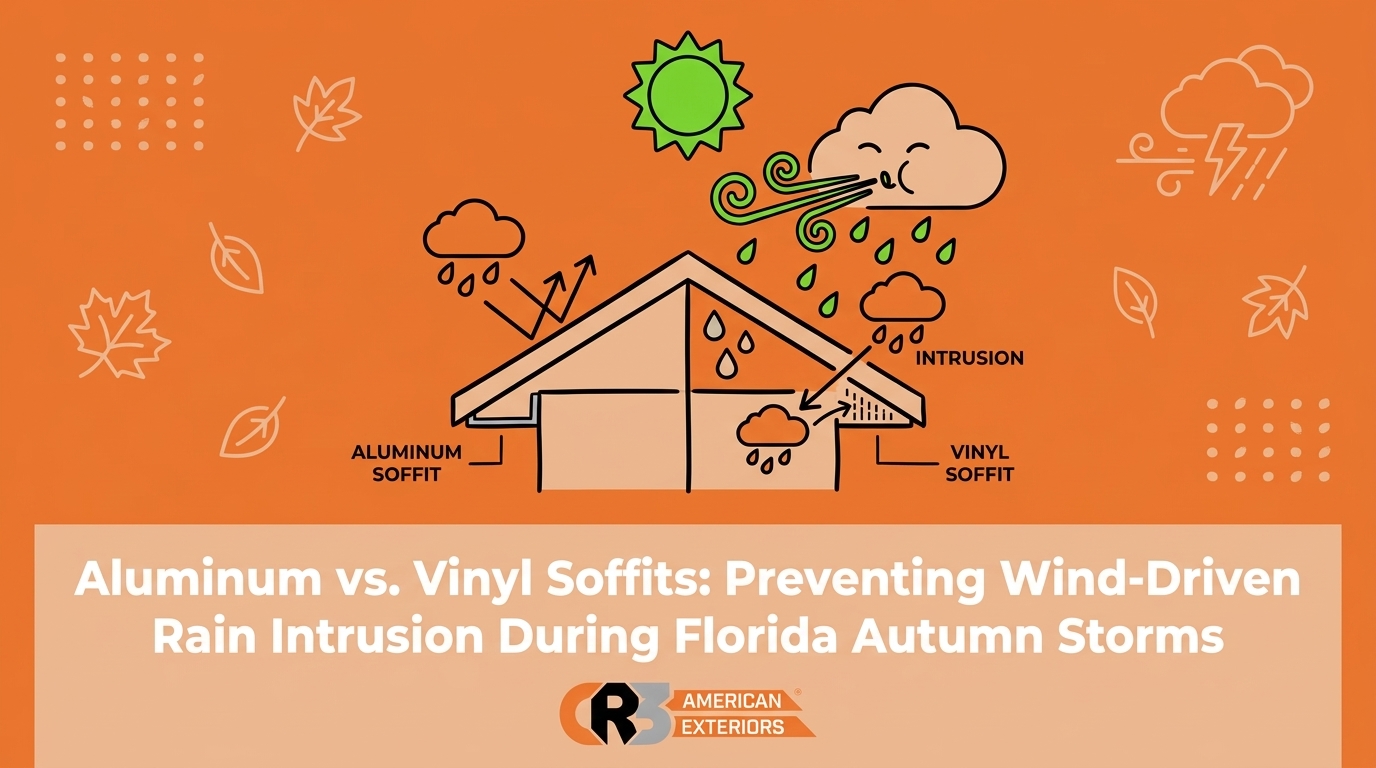
When sustained winds strike the broad side of a house, the air cannot simply stop. It is forced to change direction rapidly. Much of this air is pushed straight up the exterior wall until it hits the overhang of the roof. This collision creates a concentrated zone of high pressure and aerodynamic uplift right at the soffit panels.
- Initial Impact: Wind hits the siding and accelerates upward toward the eaves.
- Pressure Differential: The high pressure outside pushes against the lower pressure inside the attic space.
- Panel Stress: The soffit material is subjected to immense upward and inward force, testing its structural limits.
- Vulnerability Point: If the material flexes, the interlocking seams between panels begin to pull apart.
How Moisture Bypasses Standard Ventilation
Standard soffit ventilation relies on passive airflow—gentle breezes moving through perforations to keep the attic cool. However, pressurized rain entry is an entirely different threat. Wind speeds as low as 35 to 50 mph carry enough force to push rain sideways, bypassing standard baffles if the panels themselves lose their shape.
FEMA guidelines and the Florida Building Code (FBC) strictly dictate appropriate wind loads for eaves precisely because of this threat. When a localized pressure zone forces water upward, a rigid barrier is the only thing standing between a dry attic and a saturated ceiling. If you are unsure how your current materials are holding up, knowing what wind damage looks like on your home—such as sagging panels, widened seams, or missing sections—is the first step in preventing catastrophic moisture intrusion.
Vinyl Soffits: Cost-Effective, But Vulnerable to Flexing
While vinyl is widely used in residential construction for good reason across many of our service areas—from Hanover, PA and Columbus, OH, to Hunt Valley, MD and Huntersville, NC—when evaluating its performance in coastal hurricane zones, you have to look beyond the initial installation. It is budget-friendly and generally offers a low-maintenance exterior solution, but you must consider how the material ages under extreme environmental stress.
The Impact of UV Degradation
The intense, year-round sun in coastal Florida takes a heavy toll on plastics. Vinyl relies on chemical plasticizers to remain flexible and resilient. Over time, constant exposure to ultraviolet rays causes these plasticizers to break down.
- Loss of flexibility: The material slowly loses its ability to bend and snap back into place without sustaining damage.
- Increased brittleness: By the time autumn storms arrive, sun-baked vinyl is far more susceptible to cracking upon impact from flying debris.
- Color fading: While mostly aesthetic, chalking and fading are clear indicators that the molecular structure of the vinyl is degrading.
High-Wind Flexing and Blow-Off Risks
The most significant drawback of vinyl we see in communities like Jupiter, West Palm Beach, and Palm Beach Gardens, FL, is its behavior under sustained negative pressure. Because vinyl is inherently flexible, high winds cause the panels to bow and vibrate rapidly. This flexing action pulls at the seams where the panels interlock.
Once a seam opens even a fraction of an inch, wind-driven rain is forced directly into the attic space. Furthermore, extreme flexing greatly increases the risk of complete panel blow-off during heavy gusts. If a section of vinyl permanently deforms after a storm, fixing warped exterior panels quickly is essential to restore the integrity of the barrier before the next weather system moves through.
Aluminum Soffits: Structural Rigidity for Coastal Defense
At CR3 American Exteriors, we recommend aluminum over vinyl for high-wind regions because structural rigidity becomes the most important characteristic of your exterior materials when surviving intense coastal weather. Aluminum soffits provide a fundamentally different level of protection because they are engineered to maintain their shape under extreme aerodynamic stress.
Tensile Strength and Aerodynamic Stability
The high tensile strength of aluminum means it resists stretching, bending, and bowing. When localized uplift pressure hits an aluminum soffit, the material holds rigid. Because the panels do not flex, the interlocking seams remain tightly closed, maintaining a solid defensive barrier.
This rigidity is why aluminum effectively blocks horizontal, wind-driven rain from bypassing the ventilation perforations. The water hits a solid, unyielding surface and drips back down the exterior wall, rather than being forced through widening gaps. For our team, providing honest, transparent recommendations means prioritizing this actual storm survival capability over pushing cheaper materials that might fail when you need them most.
Corrosion Resistance in Humid Environments
A common concern homeowners have about metal exteriors in regions like Ocala, The Villages, and Jupiter, FL, is the potential for rust. However, modern aluminum soffits are highly corrosion-resistant.
Unlike steel, aluminum does not rust. When exposed to oxygen, it forms a microscopic layer of aluminum oxide that naturally seals the metal against further degradation. Additionally, modern manufacturing applies heavy-duty, baked-on enamel coatings that protect the metal from coastal salt, high humidity, and intense UV rays. This combination of structural strength and environmental resilience makes aluminum a highly proactive defense mechanism for homes located in recognized wind-borne debris regions.
Side-by-Side Comparison: Aluminum vs. Vinyl in High Winds
Making a decision for your home requires looking at how these materials perform across several critical categories during severe weather events. This side-by-side breakdown highlights the differences when facing Florida autumn storms wind-driven rain intrusion.
| Performance Category | Aluminum Soffit | Vinyl Soffit |
|---|---|---|
| Wind Resistance | Holds rigid under high pressure; extremely low risk of blow-off. | Flexes and bows under pressure; higher risk of blow-off in severe gusts. |
| Moisture Defense | Seams remain tightly locked, effectively blocking horizontal rain. | Flexing causes seams to open, allowing pressurized rain into the attic. |
| UV Durability | Baked-on coatings resist fading; structural integrity is unaffected by sun. | Plasticizers degrade over time, leading to brittleness and cracking. |
| Maintenance Needs | Requires minimal upkeep; highly resistant to coastal salt and humidity. | Requires minimal daily upkeep, but may need frequent post-storm repairs. |

The Ripple Effect: When Soffit Defenses Fail
The danger of compromised eaves extends far beyond a few dripping panels. When soffit defenses fail during October late-season tropical moisture, the resulting water intrusion creates a ripple effect of secondary damage throughout the entire home.
Attic moisture intrusion is rarely noticed immediately. By the time you see a water stain on your living room ceiling, significant structural degradation has already begun. The consequences of failed soffits include:
- Ruined Insulation: Fiberglass and blown-in insulation lose their thermal resistance the moment they become saturated with water, leading to massive energy inefficiencies.
- Mold and Mildew Growth: A dark, warm, and wet attic is the perfect breeding ground for toxic mold, which can spread rapidly through your HVAC ductwork.
- Interior Wall Damage: Wind-driven rain does not just pool on the attic floor; it frequently travels down interior wall cavities, rotting wooden studs and destroying drywall from the inside out.
- Exterior Rot: Compromised overhangs allow water to cascade behind your exterior cladding. Spotting the signs your siding is trapping moisture is often the first clue that your eaves have failed.
Because the stakes are so high, our crews frequently perform pre-winter exterior inspections following the autumn storm season, and we cannot stress their importance enough. Investing in rigid, reliable materials upfront prevents the cascading costs of extensive secondary repairs later.
Frequently Asked Questions
Which soffit material is best for high winds?
Our experts widely consider aluminum to be the best soffit material for high-wind environments due to its exceptional structural rigidity. Because it does not flex or bow under negative pressure, the interlocking seams remain tightly closed. This prevents the panels from blowing off and stops wind-driven rain from bypassing the barrier.
How does wind-driven rain get into the attic?
Wind-driven rain enters the attic when aerodynamic uplift forces water upward against the eaves, exploiting any gaps or flexing in the soffit material. If wind speeds exceed 35 to 50 mph, the pressure can force moisture sideways through standard ventilation baffles or through seams that have pulled apart due to high-wind flexing.
Is aluminum soffit better than vinyl in Florida?
Yes, our team consistently finds that aluminum generally outperforms vinyl in Florida’s demanding coastal climate. Aluminum withstands the intense UV radiation without becoming brittle, and its rigidity provides superior defense against the aerodynamic uplift and horizontal rain generated by tropical storms and hurricanes.
Can wind blow off vinyl soffit?
Yes, high winds can easily blow off vinyl soffit panels if they are subjected to sustained aerodynamic uplift. Because vinyl is flexible, negative pressure causes it to bow outward, which can pull the material entirely out of its securing channels and expose the attic to the elements.
How do you stop wind driven rain in soffits?
The most effective way to stop wind-driven rain is to install rigid soffit materials, like aluminum, that will not flex under pressure, ensuring seams stay tightly locked. Additionally, ensuring proper professional installation with secure channeling and appropriate baffling behind the vents will block horizontal moisture from reaching the inner attic space.
Does UV exposure affect soffit wind resistance?
UV exposure significantly affects the wind resistance of vinyl soffits by breaking down the chemical plasticizers that keep the material flexible. Over time, sun-baked vinyl becomes brittle and fragile, making it much more likely to crack, shatter, or blow off entirely when struck by high winds or flying debris.
Protecting Your Home for the Long Haul
At CR3 American Exteriors, we believe choosing the right exterior materials is about more than just boosting curb appeal; it is about securing your home against the unpredictable forces of nature. If you are concerned about the structural risks of soffit damage, taking action with a thorough pre-winter inspection now can save you from extensive secondary repairs later. Ensure your eaves are equipped with the rigidity needed to weather any storm.