Safely Hanging Holiday Lights on Roof Edges: Why You Should Never Use Staple Guns
Nov 6, 2026
The Hidden Cost of Rushing Your November Holiday Prep
Before the first winter chill arrives, discovering the best method for safely hanging holiday lights on roof edge systems becomes a top priority for homeowners eager to celebrate the season. As the days grow shorter and the festive season approaches, there is a familiar, annual rush to get the exterior decorations up and running. In the middle of this November holiday prep before winter weather sets in, speed often feels like the most important factor. You want to finish the job before your fingers go numb, which makes the heavy-duty staple gun sitting in your toolbox look incredibly tempting.
However, reaching for a mechanical staple gun to secure light strands is one of the most common and destructive mistakes made during seasonal decorating. At CR3 American Exteriors, our team frequently sees the hidden damage caused by this exact shortcut. While it certainly speeds up the installation process, driving metal staples directly into your roofing system fundamentally compromises the continuous waterproofing layer that protects your home. Your roof is designed to be a seamless, impenetrable shield against the elements. Every time you squeeze the trigger of a staple gun, you are intentionally punching holes in that vital defense system.
Proper pre-season planning means protecting the exterior shell of your home, not puncturing it for the sake of convenience. A comprehensive approach to winter roof preparation involves securing your home against moisture, ice, and freezing winds. When you choose speed over safety, you inadvertently invite those exact elements into your attic and walls. Understanding the mechanics of how your roof works—and why staples defeat that engineering—is the first step toward a safe, leak-free holiday season.
Why Staple Guns and Asphalt Roof Systems Don’t Mix
To understand why staple guns are so detrimental, it helps to look at the engineering behind asphalt architectural shingles and standard drip edges. Modern roofing systems are meticulously designed to shed water through a series of overlapping, unbroken barriers. Gravity does the heavy lifting, pulling rain and snowmelt down the slope of the roof, over the protective granules, past the asphalt layer, and safely into the gutter system. This entire process relies on the fact that the surface remains completely continuous.
The Anatomy of a Puncture: When you use a mechanical staple gun, you are forcefully driving a piece of galvanized steel through multiple critical layers of your roof. The staple crushes the protective mineral granules, pierces the weather-resistant asphalt coating, and severs the fiberglass matting that gives the shingle its structural strength.
Direct Pathways for Moisture: Even though a staple creates a hole that is only a fraction of a millimeter wide, that tiny opening is all water needs. These micro-punctures create direct, unimpeded pathways straight down to the sensitive underlayment and the wooden roof deck below.
Aggressive Force vs. Engineered Protection: Asphalt shingles are highly durable against wind, rain, and hail, but they are relatively fragile when subjected to the aggressive, concentrated force of a mechanical staple gun. The impact often causes micro-cracking radiating outward from the puncture site, weakening a much larger area of the shingle than just the hole itself.
| Roof Component | Intended Function | Impact of a Staple Gun Puncture |
|---|---|---|
| Mineral Granules | Protect the asphalt from UV degradation and add fire resistance. | Crushed and dislodged, leaving the underlying asphalt exposed to rapid sun damage. |
| Asphalt Coating | Provide the primary waterproofing barrier against rain and snow. | Pierced completely, breaking the watertight seal and allowing moisture to bypass the surface. |
| Fiberglass Mat | Provide structural stability and prevent the shingle from tearing. | Severed fibers weaken the shingle’s core, making it highly susceptible to wind damage. |
| Drip Edge Flashing | Direct water safely off the roof edge and into the gutter. | Metal staples can rust, corrode, and create entry points behind the gutter line. |
By using a staple gun, you are essentially asking a waterproof system to perform flawlessly while actively drilling holes into it. In our experience replacing compromised roofs across Savannah, GA, the math simply does not work in favor of the homeowner.
The Freeze-Thaw Cycle: How Micro-Punctures Become Major Leaks
The true danger of stapling lights to your roof rarely reveals itself on the day you install the decorations. The damage is a slow, insidious process driven by the physics of winter weather. The core issue revolves around one fundamental scientific principle: water expands by approximately 9% when it freezes. This expansion exerts incredible outward pressure on whatever material is containing the water.
During the typical November holiday prep before winter weather sets in, the newly created staple holes sit waiting for the first precipitation. In coastal regions like Savannah, GA, the climate creates the perfect storm for rapid roof degradation. With heavy winter rains, coastal moisture, and occasional freezing overnight temperatures, the conditions are ripe for structural damage. Our repair crews have traced countless mid-winter attic leaks back to these tiny, seemingly harmless punctures.
The Daily Cycle: During the day, sunlight or ambient heat from your attic melts any overnight frost or ice on your roof. This liquid water flows down the slope and is drawn directly into the tiny staple punctures through capillary action. As the sun sets and temperatures in Savannah plummet below freezing on cold nights, that trapped water turns to ice.
The Expansion Phase: As the water freezes and expands by 9%, it forcefully pushes against the surrounding asphalt and fiberglass matting. This expansion widens the original micro-puncture, creating microscopic cracks in the shingle.
The Accumulation of Damage: When the ice melts the next day, it leaves behind a slightly larger hole, which then collects even more water. The following cold night, a larger volume of water freezes, causing an even larger expansion. This relentless freeze-thaw cycle repeats throughout the winter whenever temperatures dip below freezing.
By the time spring arrives, those tiny, seemingly harmless staple holes have been cracked and stretched into significant breaches in your roofing system. Because this damage occurs beneath the surface and behind the gutters, these hidden leaks often go entirely unnoticed until significant internal damage—such as rotting roof decking, moldy attic insulation, or water stains on your interior ceilings—has already occurred.

Voided Warranties and Unnecessary Structural Damage
Beyond the immediate physical damage to your home, using a staple gun on your roof carries significant long-term administrative and financial consequences. Roofing systems are major investments, and manufacturers provide extensive warranties to guarantee the performance of their products. However, those warranties come with strict installation and maintenance guidelines.
The Asphalt Roofing Manufacturers Association (ARMA) and virtually all major shingle manufacturers are explicitly clear regarding unapproved roof penetrations. When you intentionally drive staples through asphalt architectural shingles and standard drip edges, you are actively violating the terms of your warranty. Mechanical punctures from staple guns are classified as intentional damage or improper maintenance. If you experience a leak later in the year—even if it is unrelated to the holiday decorations—an inspector will spot the staple holes, and the manufacturer can immediately void the warranty coverage for the affected areas, or even the entire roof.
What begins as a well-intentioned afternoon of DIY decorating can quickly escalate into the need for premature, large-scale roof replacements. We constantly remind our customers that the cost of replacing rotted decking, compromised underlayment, and damaged shingles far outweighs the few minutes saved by using a staple gun.
Protecting the roof from metal punctures is crucial for ensuring it reaches its intended lifespan. Every component of your exterior relies on the integrity of the layer above it. By prioritizing safe attachment methods and protecting your roof from nail damage and staple punctures, you preserve both the physical structure of your home and the valuable warranty that backs it.
Safely Hanging Holiday Lights on Roof Edges: Damage-Free Alternatives
Fortunately, you do not have to choose between a beautifully decorated home and a watertight roof. The exterior decorating industry has evolved significantly, providing highly effective, practical solutions that satisfy the need for festive displays without causing any harm to your property.
By utilizing purpose-built accessories, you can achieve a professional-looking light display while keeping your asphalt architectural shingles and standard drip edges completely intact. When planning your seasonal display, incorporating safe holiday decorating tips ensures your home remains secure against the winter elements. These methods require absolutely no tools, saving you time and frustration while preserving the roof’s structural integrity.
Using Plastic Shingle Clips
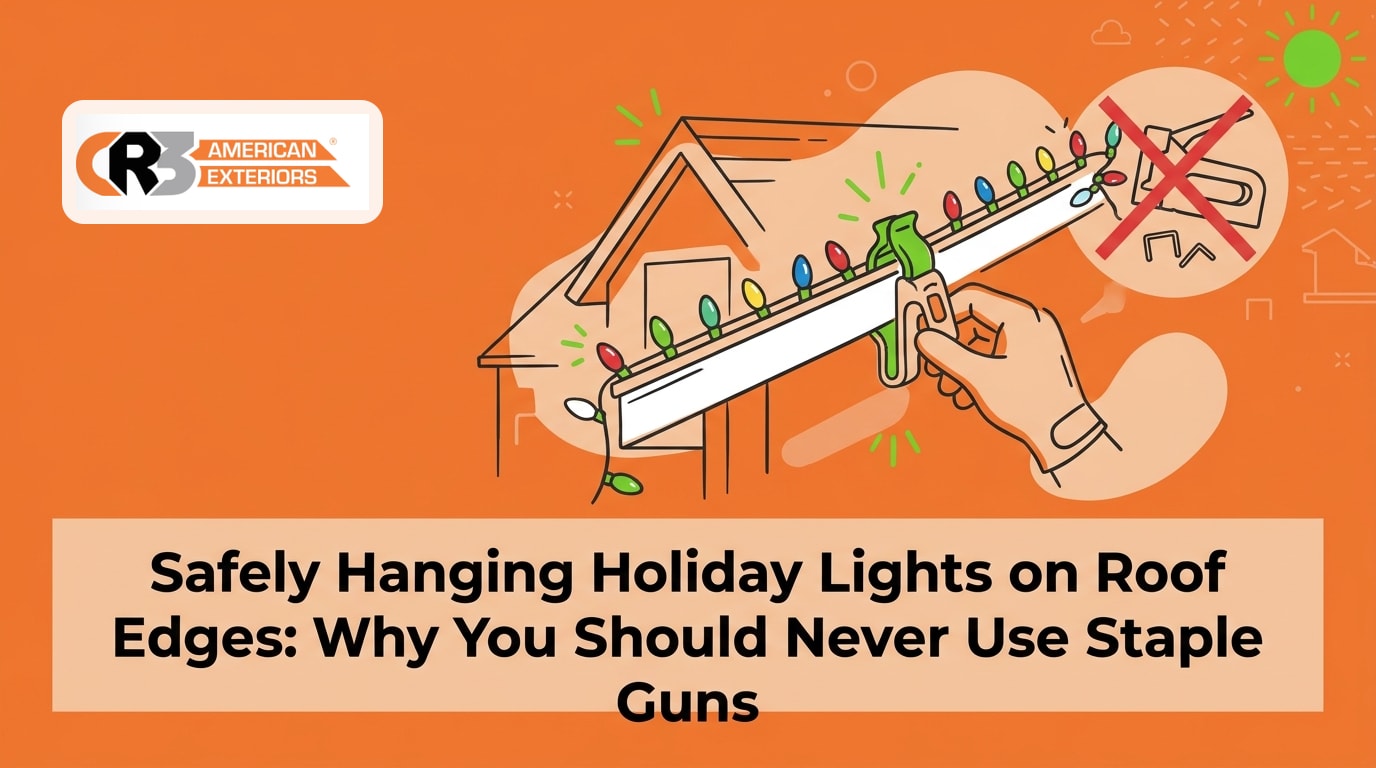
Plastic shingle clips are the gold standard for damage-free roof decorating. These specialized fasteners are designed to grip the edge of the shingle using friction and leverage, rather than mechanical penetration.
- Select the right clip: Ensure you purchase clips designed specifically for architectural shingles, as these shingles are thicker and require a wider clip opening than standard 3-tab shingles.
- Position carefully: Gently lift the very edge of the shingle just enough to slide the flat tab of the clip underneath. The clip should sit flush against the roof line.
- Respect the temperature: Never force, pry, or bend shingles when they are cold. Asphalt becomes brittle in near-freezing temperatures and can snap if lifted too aggressively. If the shingle resists, do not force it.
- Secure the strand: Once the clips are spaced evenly along the roof line, snap the light wire into the designated holding loops to keep them secure during heavy winter winds.
Utilizing Gutter Hooks
For homes with standard drip edges and functional gutter systems, gutter hooks offer an excellent, highly visible alternative to hanging lights directly on the shingles.
- Attach to the front lip: Hang the clips directly on the outer, front-facing lip of the gutter trough.
- Protect the flashing: Avoid interfering with the drip edge flashing that sits behind the gutter; the clip should only interact with the gutter itself.
- Verify stability: Ensure the gutter is clean, free of heavy wet leaves, and securely fastened to the fascia board before adding the extra weight and wind-drag of holiday light strands.
- Space evenly: Place a hook every 12 to 18 inches to prevent the light strands from sagging or whipping against the house during winter storms.
Inspecting Your Roof Edge Before You Decorate
Before you untangle a single strand of lights or set up your ladder, it is highly recommended to perform a proactive safety check of your home’s exterior. The period of November holiday prep before winter weather sets in is the ideal time to identify existing vulnerabilities before they are subjected to heavy winter rains and coastal winds.
At CR3 American Exteriors, we have a deep commitment to long-term roof integrity and honest customer service. As local roofing professionals, we’ve seen firsthand how decorating over existing damage can severely exacerbate the problem during heavy winter storms. That is why our team always encourages homeowners to evaluate their roof line before adding seasonal elements.
What to look for during your ground-level inspection:
- Loose or bent drip edge flashing: The metal edging should sit flat and securely against the roof line, directing water into the gutter.
- Missing, cracked, or curling shingles: Any visible damage to the asphalt architectural shingles means the waterproofing layer is already compromised.
- Sagging or pulling gutters: Gutters that are pulling away from the fascia board will not support the added weight of lights and heavy winter rainfall.
- Granule loss in the gutters: Excessive mineral granules washing out of the downspouts indicates that the shingles are reaching the end of their lifespan and may be too fragile to handle decorating clips.
If you spot any of these warning signs, it is crucial to address the compromised areas before the heavy winter weather sets in. Ignoring these issues or covering them up with decorations will only lead to more extensive interior damage. If the damage is significant, understanding the professional roof replacement process can help you make informed decisions about securing your home for the long term.
Keep Your Home Festive and Leak-Free This Winter
A beautiful, welcoming holiday display should never come at the cost of a leaking roof. The temptation to rush through the November holiday prep before winter weather sets in is understandable, but the long-term consequences of using a staple gun are simply not worth the short-term convenience. Every puncture in your asphalt shingles is an open invitation for moisture, freeze-thaw expansion, and structural decay.
By making the simple switch and prioritizing plastic shingle clips and gutter hooks over destructive staples, you ensure your home remains both festive and fully protected. Encourage your neighbors to do the same, and prioritize your home’s long-term defense against the harsh winter elements. If you happen to notice existing damage, loose flashing, or fragile shingles during your pre-decorating inspection, do not hesitate to reach out to our team at CR3 American Exteriors to get your roof back to peak condition before the first major winter storm arrives.
Frequently Asked Questions
Can I staple Christmas lights to my roof?
No, you should never staple Christmas lights to your roof. Using a staple gun drives metal punctures directly through the protective granules, asphalt coating, and fiberglass matting of your shingles. These holes create direct pathways for winter moisture to enter your underlayment and roof deck, leading to leaks, rot, and significant structural damage over time.
How do you attach lights to a roof edge without causing damage?
The safest way to attach lights to a roof edge is by using purpose-built plastic shingle clips or gutter hooks. Shingle clips slide gently under the edge of the asphalt shingle using friction to hold the lights in place, while gutter hooks attach directly to the front lip of your rain gutters. Both methods require no tools and create zero punctures in your waterproofing barrier.
Will staples damage my asphalt roof shingles?
Yes, staples cause immediate and lasting damage to asphalt roof shingles. The impact of the staple gun can crack the surrounding asphalt, and the metal puncture severs the structural fiberglass matting. Furthermore, as water enters the staple hole and freezes during the winter, it expands by about 9%, which widens the crack and accelerates the degradation of the shingle.
What is the best way to hang Christmas lights outside?
The best way to hang Christmas lights outside is to use non-destructive plastic clips designed specifically for your home’s exterior features. Use specialized architectural shingle clips for the roof line, gutter hooks for the eaves, and brick or siding clips for the walls. Always inspect your exterior for existing damage before hanging lights, and avoid using any mechanical fasteners like nails, screws, or staples.
Does puncturing my roof with staples void the manufacturer warranty?
Yes, intentionally puncturing your roof with staples will almost certainly void your manufacturer warranty. Major roofing manufacturers and the Asphalt Roofing Manufacturers Association (ARMA) classify staple holes as unapproved penetrations and improper maintenance. If a leak occurs, the presence of intentional mechanical punctures gives the manufacturer grounds to deny warranty coverage for the affected areas.