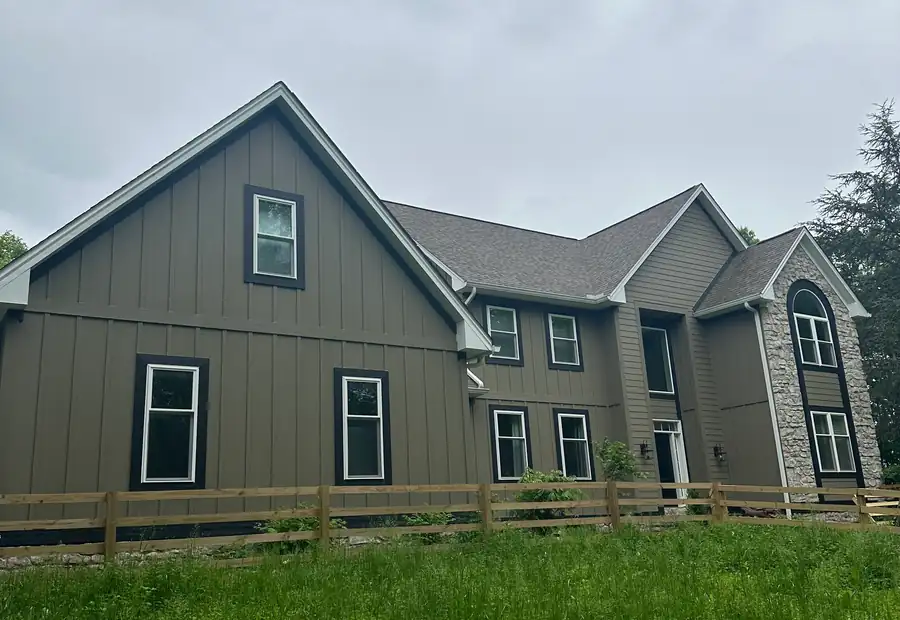

Low maintenance does not mean
no attention
Siding maintenance is mostly simple: appropriate cleaning, a look around your house a few times a year and prompt attention when a change could let water behind the exterior. Here is what to check, by material, and when to call.
Care by material
What each material needs
Always follow the current instructions for the exact product and finish installed on your home. The guidance below is a practical starting point.
| Material | Routine care | Watch closely |
|---|---|---|
| Vinyl siding | Wash as appropriate for the product and inspect for loose, cracked or displaced panels. | Watch transitions, penetrations and areas exposed to impact or concentrated heat. |
| LP SmartSide | Follow current manufacturer guidance for cleaning, finish care and maintenance. | Pay attention to coating condition, clearances, cut edges, joints and moisture-prone details. |
| James Hardie | Follow current manufacturer guidance for washing, paint or finish care and inspection. | Monitor caulked joints, flashing, clearances, penetrations and areas where moisture can collect. |
| Best practiceAll three materials | Keep product records and address concerns before they become larger repairs. | |

Look after major weather events and through the seasons
You do not need to diagnose the cause. Notice the change, document it safely and ask for professional help when the answer is unclear.
- 01
Panels and boards
Look for cracks, displacement, warping, impact or unusual movement. Stand back and look along each wall; a panel that bows or sits out of line is easier to spot from an angle.
- 02
Finish and surfaces
Notice staining, fading patterns, peeling, biological growth or damage. Green or dark growth on a shaded wall usually cleans off, but a stain that returns in the same spot can point to water behind the siding.
- 03
Openings and joints
Observe trim, sealant, flashing and transitions around windows and doors. Cracked or missing sealant around a window is a small repair today and a common path for water later.
- 04
Water pathways
Check gutters, downspouts, grade and places where water repeatedly reaches the wall. Overflowing gutters and soil or mulch piled against the bottom course keep siding wet longer than it was designed for.
Through the year
A short seasonal routine is enough for most homes
In spring, walk around the house after the last freeze and look for panels that loosened over winter.
In summer, rinse off dirt and pollen the way the manufacturer recommends and keep sprinklers from soaking the same wall every day.
In fall, clear the gutters and trim back branches and shrubs that touch the siding.
After any storm with hail or strong wind, check the sides that faced the weather.
Take a photo of anything that looks different. A dated photo makes it easier to tell whether a problem is growing, and it is useful if you later file an insurance claim.
When to call CR3
Contact CR3 when siding becomes loose, cracked or soft; staining returns; trim or joints open; or you suspect water is reaching the wall behind the finished surface.
- Siding that is loose, cracked or soft
- Staining that returns
- Trim or joints that open
- Water reaching the wall behind the finished surface
Questions about what you see?
We can evaluate the condition, explain whether service is appropriate and help you understand the next step.
Always follow the current care instructions for your exact installed product.