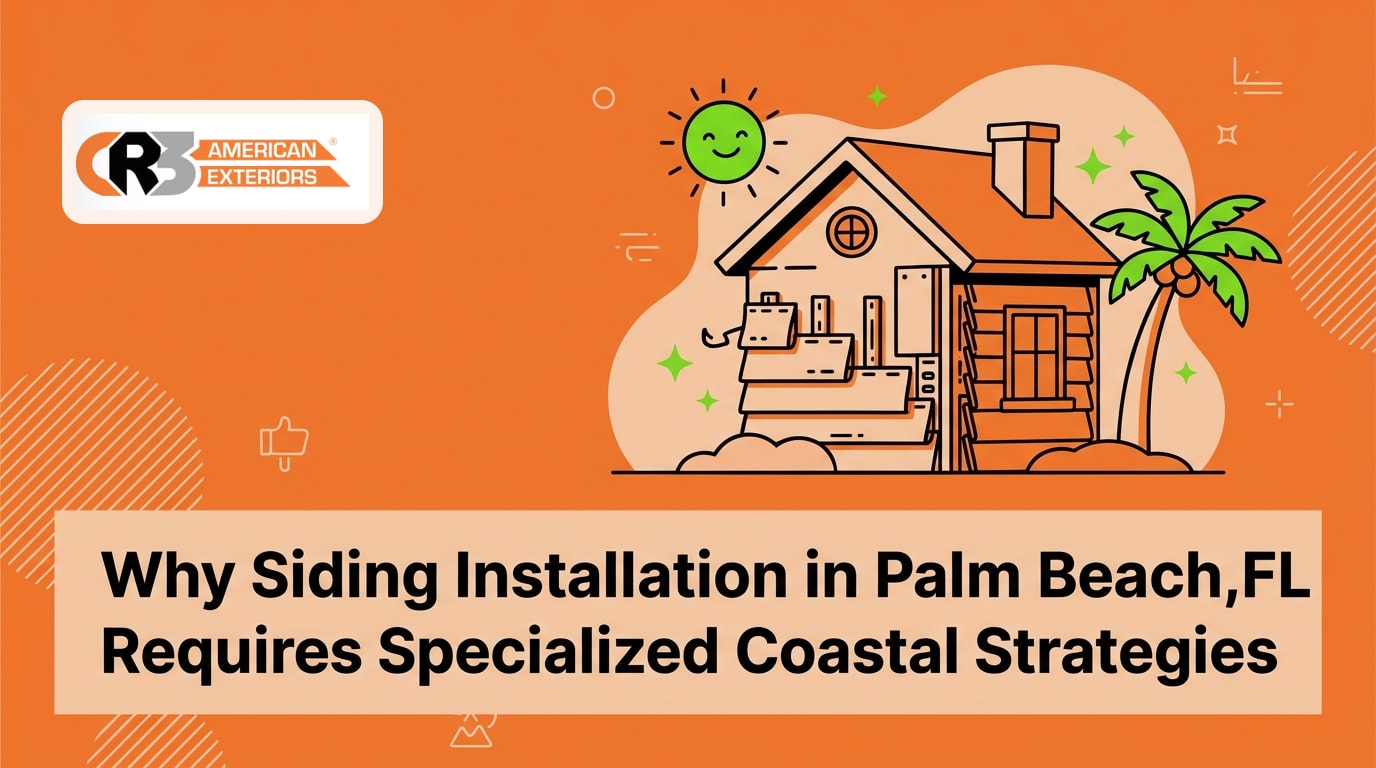
Why Siding Installation in Palm Beach, FL Requires Specialized Coastal Strategies
Nov 21, 2026
The Hidden Toll of Coastal Weather on Your Home’s Exterior
Your exterior walls take a daily beating from the elements, but the most severe damage often happens beneath the surface where you cannot immediately see it. When considering a siding installation in Palm Beach, FL, homeowners quickly discover that standard inland materials simply cannot survive the harsh realities of the local climate. At CR3 American Exteriors, our team regularly sees the hidden toll this takes during our structural assessments. Between the relentless sun, high humidity, and corrosive salt spray found throughout Palm Beach coastal and intracoastal zones, traditional cladding degrades at an accelerated rate. Paint chalks, panels warp, and hidden moisture begins to rot the underlying structural framing long before visible signs of failure appear on the surface.
Modern exterior upgrades in coastal environments are about scientific resilience, not just aesthetic appeal. Selecting the right cladding requires a deep understanding of how specific materials interact with constant environmental stressors. Understanding the evolution of siding materials helps homeowners make informed decisions about protecting their property. Furthermore, recognizing siding replacement priority early can prevent deeper structural moisture damage that compromises the safety and integrity of the home.
Decoding High-Velocity Hurricane Zone (HVHZ) Building Codes
Coastal properties face unique regulatory requirements designed to protect both life and property during extreme weather events. In South Florida, strict adherence to these regulations is non-negotiable. The region’s heavy tropical rains and severe hurricane risks necessitate a building envelope that can withstand extraordinary forces without catastrophic failure.
Understanding Wind-Load Ratings
A High-Velocity Hurricane Zone (HVHZ) designation applies to specific coastal areas where wind speeds historically reach destructive levels. Wind-load ratings are calculated based on a property’s coastal proximity, building height, and surrounding terrain exposure. These ratings dictate exactly how much force the exterior cladding must be able to endure.
It is crucial to understand the difference between positive and negative wind pressures. Positive pressure pushes directly against the siding, testing its impact resistance and rigidity. Negative pressure, however, creates a vacuum effect on the leeward side of the house, actively attempting to pull the siding off the wall. If the exterior cladding fails under negative pressure, the sudden, catastrophic pressure change inside the home can lead to total roof failure.
Florida Building Code (FBC) Compliance
The Florida Building Code (FBC) dictates specific impact resistance standards and installation techniques to protect the building envelope in these zones. Compliance is not merely a suggestion; it is a legal requirement that directly impacts your property’s insurability.
Performing unpermitted work or utilizing non-compliant materials will almost certainly void homeowners insurance policies, leaving the property owner fully liable for storm damage. This is why professional structural assessments are mandatory before any installation begins. A qualified contractor will evaluate the existing wall assembly, verify the structural integrity of the studs, and ensure that the new cladding system meets or exceeds all local FBC requirements for wind uplift and impact resistance.
Combating Salt-Air Corrosion and Intense UV Exposure
The coastal environment introduces specific degradation factors that rapidly destroy inferior building materials. Combating these elements requires a holistic approach to the entire wall assembly, ensuring that every layer—from the outer cladding to the hidden fasteners—is engineered for coastal survival.
The Problem: Standard exterior materials degrade quickly in coastal zones. Homeowners frequently notice rapid fading, chalking, brittleness, and unsightly rust stains bleeding through their exterior paint within just a few years of installation.
The Cause: This rapid deterioration is the result of a harsh chemical and environmental combination. The extreme UV index levels in South Florida bombard exterior surfaces, breaking down the molecular bonds in lower-grade plastics and vinyls, causing them to become brittle and chalky. Simultaneously, the chemical interaction between coastal salt spray and standard building materials accelerates oxidation. Airborne chloride ions settle on the exterior and penetrate small gaps, causing standard metal fasteners to rust and fail. Furthermore, the constant high humidity creates a perfect breeding ground for organic growth, allowing mold and mildew to take root on porous exterior surfaces.
The Solution: Long-term durability requires a specialized, systems-based approach. This means selecting factory-finished, non-porous cladding that resists UV degradation and organic growth. It also requires upgrading all hidden components, utilizing marine-grade fasteners, and implementing advanced weather-resistant barriers that block salt-laden moisture from reaching the vulnerable wood framing beneath the surface.
Selecting Resilient Siding Materials for Tropical Climates
Choosing the right material is the most critical decision in a coastal exterior renovation. While traditional vinyl siding is popular in many parts of the country, it often falls short in hurricane zones due to its susceptibility to wind uplift and UV brittleness. Instead, denser materials are required to meet FBC standards reliably.
Fiber cement and engineered wood are the leading choices for tropical climates. Fiber cement is composed of Portland cement, sand, water, and cellulose fibers, creating a remarkably dense, dimensionally stable board that is impervious to wood-boring insects and highly resistant to moisture. Engineered wood offers similar durability, utilizing treated wood strands combined with exterior-grade resins to resist rot and withstand high winds.
Both materials often feature factory-applied finishes engineered to resist UV fading and block moisture infiltration, ensuring the home retains its curb appeal despite the intense Florida sun. Understanding proper siding maintenance requirements is essential to keep warranties intact and ensure these premium materials perform optimally for decades.
| Material Type | Wind-Load Durability | Moisture & Salt Resistance | UV Fade Resistance |
|---|---|---|---|
| Fiber Cement | Excellent (Meets strict HVHZ codes) | High (Impervious to rot and salt degradation) | High (With factory-applied finishes) |
| Engineered Wood | Excellent (High impact resistance) | Moderate-High (Requires proper sealing) | High (With factory-applied finishes) |
| Standard Vinyl | Low-Moderate (Prone to wind uplift) | High (Plastic does not rot) | Low (Prone to brittleness and chalking) |

Advanced Fastening and Moisture Management Techniques
The visible cladding is only one part of a successful exterior renovation. The technical, behind-the-scenes installation methods are what truly ensure longevity in coastal areas. A beautiful exterior is worthless if the underlying structure is rotting or if the panels blow off during the next major storm.
The Crucial Role of Corrosion-Resistant Fasteners
- Material Selection: Standard electro-galvanized nails will rust away quickly in salt air. Installers must use high-grade stainless steel or hot-dipped galvanized fasteners to ensure the physical connection to the house remains secure.
- Preventing Hidden Failure: When standard fasteners corrode, they lose their holding power. This hidden structural failure is the primary reason for siding blow-offs during high-wind events. The siding itself may be intact, but the rusted nails simply let go of the studs.
- Managing Expansion: Proper installation requires leaving precise expansion gaps. High humidity and temperature fluctuations cause materials to expand and contract; without these gaps, panels will buckle, warp, or crack under pressure.
Integrating Rigid Foam Insulation
- Thermal Envelope Improvement: Integrating rigid foam insulation directly beneath the new siding significantly improves the home’s thermal envelope. This continuous layer of insulation acts as a thermal break, preventing heat transfer through the wooden wall studs.
- Year-Round Thermal Stability: While Florida is known for its heat, late fall and winter bring unpredictable cold snaps. By blocking outdoor temperature extremes from penetrating the walls, rigid foam insulation stabilizes your interior climate, ensuring heating reliability and reducing the strain on your HVAC system during cooler winter months.
- Potential Incentives: Upgrading the thermal envelope may make the property eligible for generic energy efficiency rebates or federal tax credits. Homeowners should always consult with a tax professional or their local utility provider to verify current program eligibility.
- Moisture Management: Advanced weather-resistant barriers (WRB) and meticulous flashing techniques around windows and doors are absolute necessities for managing tropical downpours and preventing water from bypassing the exterior defense.
Property Preparation Checklist for Your Siding Project
A major exterior renovation requires logistical planning. Providing contractors with safe, unobstructed access ensures the project stays on schedule and minimizes the risk of accidental property damage. Taking proactive steps allows for a seamless, delay-free installation, which is vital when you need to protect your home from storm damage.
- Clear the perimeter: Remove all patio furniture, potted plants, garden hoses, and decorative exterior items. Contractors need a wide, clear path to move large materials, set up scaffolding, and operate safely around the entire footprint of the house.
- Protect landscaping: Trim back shrubs, trees, and branches that physically touch the house or hang closely over the roofline. Consider covering delicate flower beds with tarps to protect them from falling construction debris and dust.
- Secure interior walls: The process of tearing off old cladding and nailing new boards into the exterior studs creates significant vibration. Walk through your home and remove fragile artwork, mirrors, or shelving items from exterior-facing walls to prevent them from falling.
- Plan for pets and children: A construction site is loud and hazardous. Establish safe zones inside the house, away from the construction noise, and ensure pets are securely kept indoors or relocated during active working hours to prevent them from stepping on stray fasteners or debris.
- Relocate vehicles: Move cars out of the driveway and garage before the crew arrives. Dumpsters and delivery trucks will require significant driveway space, and you do not want your vehicles blocked in or exposed to airborne dust.
Timing Your Siding Upgrade: The Late-Fall Advantage
While exterior renovations can technically be performed year-round, strategic scheduling offers significant advantages in South Florida. Timing your project to align with the region’s climate patterns can result in a smoother, faster installation process.
The post-hurricane November dry season is widely considered the optimal time for exterior work. At CR3 American Exteriors, we always advise homeowners to take advantage of this late-fall window. November marks the official end of the Atlantic Hurricane Season, providing a much-needed period of stable weather. During this time, lower humidity levels and significantly reduced rainfall allow crews to maintain uninterrupted installation schedules. Tearing off a home’s exterior defense during the rainy summer months introduces a high risk of water intrusion if a sudden afternoon thunderstorm rolls in while the walls are exposed.
By scheduling in late fall, you benefit from consistent, dry weather, ensuring the underlying wood framing remains completely dry before the new weather-resistant barriers and siding are applied. Furthermore, completing exterior renovations at this time secures your building envelope before the busy holiday season begins, giving you peace of mind and a beautifully restored exterior for winter gatherings. Knowing what to look for in a siding company during this prime scheduling window ensures you partner with a contractor who understands the critical nature of coastal weatherproofing.
Frequently Asked Questions
What is the best siding for Florida homes?
Fiber cement and engineered wood are widely considered the best options for Florida homes due to their density and resilience. These materials resist rot, withstand high-velocity winds, and offer excellent defense against the corrosive salt air and intense UV exposure common in coastal environments.
Do you need a permit to replace siding in Florida?
Yes, replacing siding in Florida requires a building permit, especially in High-Velocity Hurricane Zones. Local building departments must review the proposed materials and installation methods to ensure they comply with the strict wind-load and impact resistance standards dictated by the Florida Building Code.
How long does siding last in a coastal climate?
When properly installed with marine-grade fasteners and high-quality weather barriers, premium siding like fiber cement can last 30 to 50 years in a coastal climate. However, standard materials like low-grade vinyl or untreated wood may begin to fail, fade, or warp within 10 to 15 years due to salt corrosion and UV damage.
What is the most hurricane resistant siding?
Fiber cement siding is highly regarded as one of the most hurricane-resistant options available. Because of its heavy, rigid composition, it performs exceptionally well under extreme positive and negative wind pressures, making it a standard choice for meeting strict coastal building codes.
How to prepare your home for a siding replacement?
Start by clearing the perimeter of all outdoor furniture, potted plants, and vehicles to give contractors safe access. Inside the home, remove fragile items and mirrors from exterior walls, as the vibration from removing and installing exterior panels can cause unsecured items to fall and break.
Can new siding improve my home’s energy efficiency for the winter?
Yes, a new siding installation can significantly improve year-round energy efficiency if rigid foam insulation is integrated into the wall assembly. This added thermal break prevents unexpected winter chills from transferring through the wall studs, ensuring heating reliability and lowering the strain on your HVAC system during the cooler holiday season.
Securing Your Coastal Home for the Future
Protecting a coastal property requires more than just standard construction practices; it demands specialized materials and rigorous installation techniques to combat salt air, UV exposure, and extreme weather. By insisting on corrosion-resistant fasteners, high-wind structural attachments, and proper moisture barriers, you ensure your investment is truly protected. A clear, technical breakdown of these necessary materials empowers you to effectively vet contractor methodologies and secure your home’s exterior for decades to come.