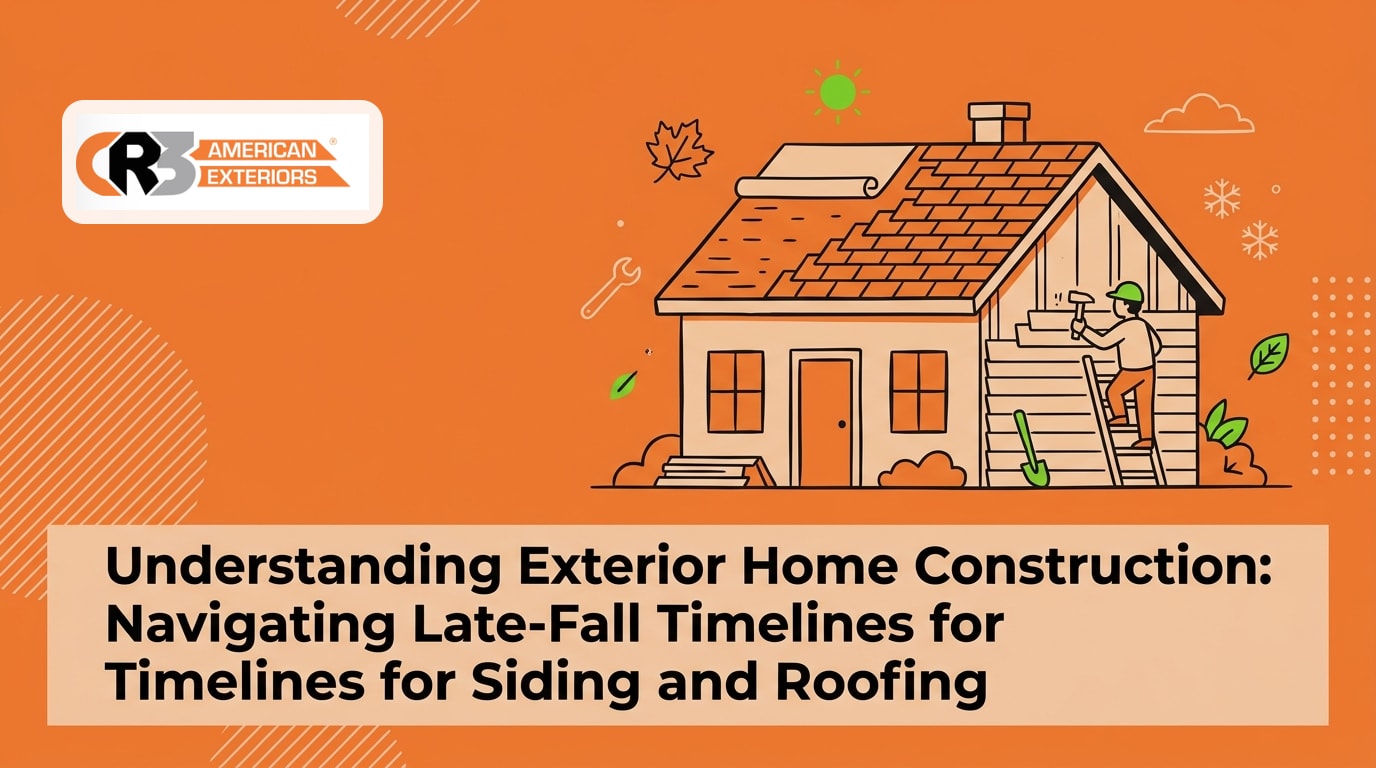
Understanding Exterior Home Construction: Navigating Late-Fall Timelines for Siding and Roofing
Nov 21, 2026
The Hidden Urgency of Late-Season Exterior Upgrades
Your aging roof or siding is showing serious wear, and with November pre-winter weather closing in, you might be wondering if it is too late in the year to start a major exterior construction project. You are not alone. At CR3 American Exteriors, our team typically fields dozens of calls from homeowners who notice missing shingles, cracked siding, or sagging gutters just as the leaves finish falling. The reality is that the transition from mild autumn weather to freezing late-fall conditions creates a very tight, weather-dependent timeline for home improvements.
For homeowners in the Columbus, OH market, the sudden drop in temperature changes everything. Exterior home updates cannot happen in just any weather. Materials react differently when the thermometer dips, meaning November is often the final safe window to secure your home before heavy snow and ice arrive. Delaying these necessary envelope repairs puts your entire house at risk of moisture damage over the winter. Fortunately, understanding the roof replacement process ensures your home is properly sealed and protected before the first major snowstorm hits.
How Temperature Drops Impact Exterior Construction Materials
The core problem: Building materials are scientifically designed to cure, bend, and seal within specific temperature ranges. When the weather gets too cold, those chemical and physical processes stop working correctly.
For most exterior building adhesives and sealants, 40 degrees Fahrenheit is the magic number. Below this threshold, caulking becomes stiff, adhesives refuse to bond, and specialized tapes lose their stickiness. This is why late-season construction requires a deep understanding of material science. In our years of handling late-season exterior upgrades, we have seen firsthand that if a contractor ignores the ambient temperature, the materials will fail long before their expected lifespan, leaving your home vulnerable to the elements. This makes a professional roof inspection incredibly valuable right now, as it helps assess material viability before temperatures plummet completely.
Asphalt Shingles and Thermal Sealing
Asphalt shingles do not just get nailed down; they actually glue themselves together. Each shingle features a factory-applied strip of sealant. During the summer, the radiant heat from the sun activates this adhesive, bonding the shingles into a unified, wind-resistant shell.
- The cold weather challenge: In late fall, the sun sits lower in the sky and temperatures drop. The shingles rely on whatever midday sun heat they can get to activate those sealant strips.
- The wind risk: If cold weather delays this thermal sealing process, the shingles remain loose. A strong winter windstorm can easily catch the unsealed edges, lifting or tearing the shingles right off your roof.
Siding Adhesives and Curing Times
Siding installation also faces severe cold-weather hurdles. Vinyl siding, for example, expands and contracts with temperature changes. If installed improperly when it is freezing, the panels can buckle or crack when the weather warms up again.
- Extended curing delays: Cold temperatures drastically extend the curing time of exterior caulks and structural adhesives used around trim and windows.
- Moisture vulnerabilities: If these sealants freeze before they fully cure, the chemical bond breaks. This improper curing leads to long-term moisture vulnerabilities, allowing winter sleet to sneak behind your brand-new siding.
| Material | Ideal Installation Condition | Risk Below 40°F |
|---|---|---|
| Asphalt Shingles | Warm, direct sunlight | Failure to thermally seal; high wind vulnerability |
| Exterior Caulk | 50°F+ for proper chemical curing | Freezing before curing; cracked seals and water leaks |
| Vinyl Siding | Moderate temperatures (flexibility) | Becomes brittle; prone to shattering if struck or cut |
Protecting Your Home’s Envelope Before the First Hard Freeze
In the construction industry, we talk a lot about the building envelope. This is the physical separator between the conditioned interior of your home and the unconditioned outside environment. It includes your roof, siding, windows, doors, and foundation. When your building envelope is compromised, your interior living spaces are directly exposed to outside threats.
In the Columbus, OH market, a pattern we see often is the destructive force known as the freeze-thaw cycle. When we open up damaged walls during late-winter repairs, we frequently find that rain or melting snow seeped into unsealed gaps in siding or under damaged roof shingles, settling into the wood framing. Overnight, when temperatures drop below freezing, that trapped water turns to ice. Because water expands by about 9% when it freezes, it acts like a microscopic wedge, prying apart building materials, widening cracks, and destroying wood fibers.
When the sun comes out the next day, the ice melts, leaving behind a larger gap that collects even more water during the next storm. This cycle repeats dozens of times throughout November and December. By spring, a minor unsealed gap can result in severe structural rot.
Furthermore, poor exterior sealing has a cascading effect on your indoor heating reliability. If cold air is constantly infiltrating through compromised siding or a failing roof deck, your furnace has to run continuously to maintain a comfortable temperature. Securing the envelope before the first hard frost stops this cycle in its tracks.
Key Exterior Construction Projects to Prioritize in November
Because the window for safe installation is closing rapidly, our team recommends prioritizing projects that protect the structural integrity of your home. While a new deck can wait until spring, securing your roof and walls cannot. Here are the top exterior projects we advise completing in late fall, handled by experts.
- Emergency Roof Replacements: If your roof is actively leaking or missing significant sections of shingles, replacement is mandatory. Our crews schedule the most sensitive phases of the installation during the warmest parts of the day.
- Siding Panel Repair: Swapping out cracked or missing siding panels prevents ice from driving directly against your home’s sheathing.
- Gutter Fortification: Gutters must be cleaned, re-pitched, and securely fastened to the fascia board. If gutters are loose, the weight of winter ice dams will tear them completely off the house.
- Flashing Inspection and Sealing: The metal flashing around your chimney, vent pipes, and roof valleys is the first line of defense against water. Resealing these areas is a quick, high-priority task.
Late-Season Roofing Installations
Roofing in November requires careful timing. Crews will often wait until the midday sun has warmed the roof deck before applying shingles. In some cases, specialized cold-weather adhesives may be utilized by professionals to manually seal the shingles if the sun is not strong enough to activate the factory adhesive strips.
Siding and Trim Fortification
Replacing damaged panels before ice storms hit is a critical pre-winter task. The focus is on ensuring all trim, J-channels, and flashing are securely fastened. Wind-driven snow can push upward, so every overlapping piece of siding must be locked in tight.

The Role of Professional Expertise in Cold-Weather Construction
During the summer, exterior construction is relatively straightforward. The materials are warm, flexible, and easy to manipulate. Late-fall construction, however, operates under strict protocols that demand high-level professional expertise. This is not the time of year for DIY exterior projects.
Professionals monitor ambient and surface temperatures differently than homeowners. The weather report might say it is 45 degrees outside, but the actual surface temperature of a plywood roof deck in the shade might be sitting at 32 degrees. Installing temperature-sensitive materials onto a freezing surface guarantees failure. Our expert crews use infrared surface thermometers to verify that the building envelope is warm enough to receive adhesives.
Additionally, professional teams use specialized equipment to keep materials at optimal installation temperatures. We often store caulking, sealants, and even shingles in heated trucks or specialized warming boxes right up until the moment of installation. This ensures the materials remain pliable and the chemical curing processes can begin properly.
These strict weather guidelines apply universally across the industry. In fact, the exact same temperature thresholds and material handling protocols that dictate residential projects also heavily impact commercial roofing construction. The physics of building materials do not change based on the size of the building.
Navigating Material Warranties and Installation Guarantees
One of the biggest risks of late-season exterior construction is unintentionally voiding your product warranties. Most major building material manufacturers have strict temperature guidelines buried deep in their warranty fine print. They specifically state the minimum temperatures required for installation.
If a contractor installs materials below 40 degrees without using approved professional cold-weather methods, those protections can be instantly voided. Manufacturers can, and will, pull historical weather data for your zip code on the day of installation if you ever file a warranty claim for failed shingles or warped siding. If the data shows it was 28 degrees that day and the proper manual sealing protocols were not followed, your claim will be denied.
This highlights the absolute importance of working with a contractor who offers robust, transparent guarantees. You need a team that understands the manufacturer’s exact specifications and refuses to cut corners just to finish a job quickly.
At CR3 American Exteriors, our commitment to honesty and transparency is built into everything we do. We understand the science behind late-season installations, and we stand behind our work. Our unique Dollar Back Nail Guarantee provides total peace of mind that your property is respected and the construction site is left spotless. It is a marker of high-quality exterior construction, ensuring the job is done right, regardless of the season.
Energy Efficiency and Long-Term Value Upgrades
Beyond simply keeping the rain out, securing your exterior envelope in late fall has a massive impact on your home’s energy efficiency. When your siding is tight and your roof is properly sealed, you eliminate the drafts and thermal bridging that pull heat out of your living spaces.
Modern siding and roofing materials offer superior thermal resistance compared to products manufactured just a decade ago. Insulated vinyl siding, for instance, adds a continuous layer of foam board directly over your home’s framing studs, stopping energy loss right at the source. High-quality roofing systems include advanced underlayments that prevent warm indoor air from escaping into the freezing attic.
Because these upgrades significantly improve winter heating efficiency, qualifying energy-efficient exterior construction upgrades may be eligible for generic federal energy tax credits or local utility incentives. While the specific programs vary by location and change frequently, we consistently remind our clients that investing in a tighter building envelope often pays dividends beyond just the aesthetic upgrade. We always advise homeowners to consult with a tax professional or their local utility provider to verify current generic program eligibility before making a final decision.
Common Questions About Winter and Fall Exterior Construction
Can exterior construction be done in the winter?
Yes, but it requires strict adherence to cold-weather protocols. Professionals can safely perform exterior construction in the winter by storing materials in heated environments and manually sealing components that usually rely on sun heat. However, certain projects involving wet materials, like pouring concrete or applying stucco, are generally paused until temperatures rise.
What temperature is too cold for roofing construction?
Generally, 40 degrees Fahrenheit is the critical threshold for standard roofing construction. Below this temperature, asphalt shingles become rigid and prone to cracking if hit with a nail gun, and their adhesive strips will not activate without manual intervention. Professional roofers use specialized techniques to safely install roofs in colder weather, but they closely monitor surface temperatures to ensure a proper seal.
What are the phases of residential exterior construction?
Residential exterior construction typically follows a top-down approach to ensure the home remains watertight. The phases begin with the roof replacement to secure the top of the envelope, followed by replacing or sealing windows and doors. The final phase involves installing house wrap, siding, and trim, finishing with the gutter system to safely direct water away from the foundation.
How late in the year can you replace siding?
You can replace siding quite late in the year, well into November or early December, provided the materials are handled correctly. Vinyl siding becomes brittle in freezing temperatures, so installers must cut it carefully to avoid shattering the panels. Fiber cement and engineered wood siding are less sensitive to cold but still require caulks and sealants that need temperatures above freezing to cure properly.
How does winter weather affect exterior material warranties?
Winter weather can void your exterior material warranties if the products are installed outside the manufacturer’s specified temperature range without approved cold-weather techniques. Manufacturers require precise conditions for sealants to bond and plastics to flex. If a failure occurs and weather records show the installation happened in freezing temperatures without proper manual sealing, the manufacturer will likely deny the claim.
Do energy-efficient exterior upgrades qualify for tax credits?
Many modern, energy-efficient exterior upgrades may qualify for generic federal energy tax credits or local utility incentives. Upgrades like insulated siding, energy-efficient windows, and certain reflective roofing materials often meet the criteria for improving a home’s thermal envelope. You should always consult with a certified tax professional to verify which current programs apply to your specific project.
Secure Your Home’s Exterior Before Winter Arrives
The window for straightforward, optimal-weather exterior construction is closing fast. As November pre-winter weather settles in, acting before the first hard freeze is the best way to protect your home from moisture intrusion, wood rot, and skyrocketing heating bills. Do not let an aging roof or cracked siding leave your family vulnerable to the elements this season.
Reiterating the importance of the roof replacement process is the first step to securing a safe, warm home. If you are noticing signs of wear, now is the time to get a professional assessment. Reach out to our team at CR3 American Exteriors today to explore your exterior construction options before the harsh winter weather truly takes hold.