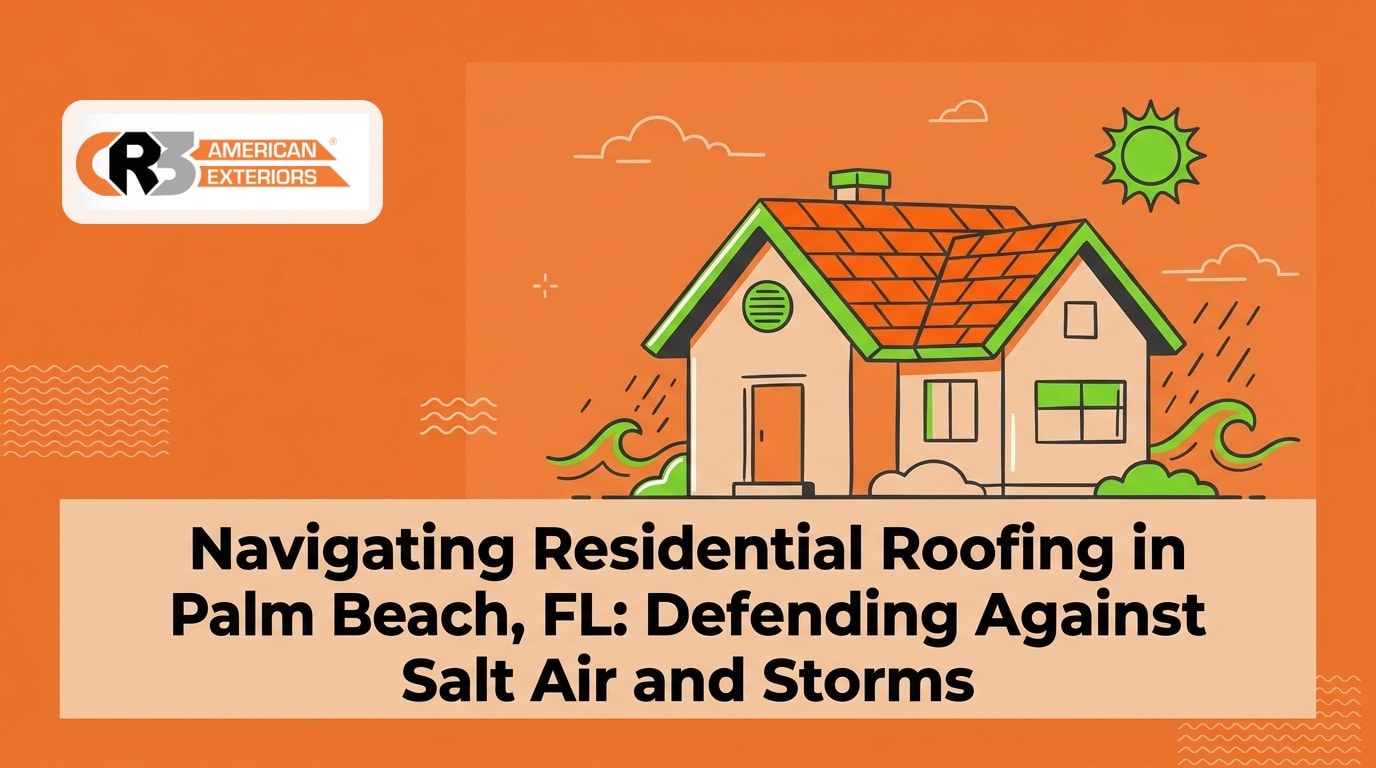
Navigating Residential Roofing in Palm Beach, FL: Defending Against Salt Air and Storms
Nov 20, 2026
The Hidden Toll of November on Your Coastal Roof
November marks the end of the Atlantic hurricane season, making it the most critical time of year to evaluate Residential Roofing in Palm Beach, FL. At CR3 American Exteriors, our team has inspected countless coastal roofs, and we know that surviving the severe summer storms is only half the battle. You have likely spent the summer months watching radar loops and securing patio furniture, but for homeowners in this region, the real danger often lies in the hidden micro-damage left behind after the heavy winds and driving rain subside.
Assessing this hidden roof damage before the winter dry season and holiday festivities begin is a critical decision point. You must decide whether to proactively repair minor flashing or shingle damage now, knowing that coastal salt air rapidly accelerates corrosion on compromised roofing components. In our experience, Palm Beach presents a unique combination of environmental stressors: sustained high winds, intense ultraviolet (UV) radiation, and highly corrosive salt air blowing off the Atlantic. Standard roofing approaches that work perfectly well inland simply fail in this climate. Understanding these coastal roofing challenges is the first step in defending your home’s structural integrity.
The post-storm reality: Just because your roof isn’t actively leaking into your living room doesn’t mean it escaped the storm season unscathed. Lifted shingles, micro-fissures in sealants, and exposed nail heads create vulnerabilities that the coastal environment will exploit over the coming months.
How Salt Air and High Humidity Compromise Standard Materials
The Problem: A pattern we see often is homeowners assuming that if a roof is rated for high winds, it is fully equipped for coastal life. However, standard roofing materials degrade at an alarming rate when exposed to the continuous salt spray and high humidity characteristic of Palm Beach.
The Cause: Airborne salt particles naturally settle on your home’s exterior surfaces. When combined with continuous high humidity, this salt creates a highly conductive environment that accelerates galvanic corrosion on metal components. Standard galvanized steel fasteners, traditional flashing, and basic metal valleys are highly vulnerable to this ongoing chemical reaction. Furthermore, moisture intrusion from degraded underlayments leads to unseen structural rot in the roof deck long before a water stain appears on your ceiling.
The Solution: Combating this environment requires specialized coastal upgrades. Upgrading to stainless steel fasteners, specialized polymer-modified underlayments, and corrosion-resistant flashing materials halts this degradation cycle. When you review our roof replacement process, you will see how integrating these specialized materials creates a comprehensive defense system against salt and moisture.
The Silent Degradation of Roofing Fasteners
The visible shingles or metal panels are only part of your roofing system. Beneath the surface, the nails and fasteners hold the entire assembly together. In a coastal environment, our crews frequently find that these hidden components are highly susceptible to rust if they are not specifically rated for salt exposure.
- Reduced wind uplift resistance: As fasteners rust, they lose their grip on the roof deck. A rusted nail cannot hold a shingle securely during a Category 3 hurricane.
- Hidden structural failure: Corroded fasteners can snap under pressure, leading to catastrophic material blow-off even if the shingle itself is intact.
- Chemical reactions: Salt air reacting with standard metal fasteners creates localized rust that can bleed into and degrade the surrounding wood decking.
The Impact of Intense UV Radiation on Roof Longevity
While wind and salt get most of the attention, the intense UV radiation in southern coastal climates is a relentless force that breaks down roofing materials day after day. Continuous exposure to the intense Florida sun bakes standard asphalt shingles, accelerating the loss of volatile oils that keep the shingles flexible and waterproof.
The mechanics of thermal shock: Palm Beach roofs frequently experience rapid temperature fluctuations. A roof baking in the afternoon sun can reach extreme temperatures, only to be rapidly cooled by a sudden, intense afternoon thunderstorm. This rapid expansion and contraction is known as thermal shock. Over time, thermal shock causes standard shingles to become brittle, crack, and lose their protective surface granules.
Granule loss is particularly damaging because those small stones are your roof’s primary shield against UV rays. Once the granules wash away into your gutters, the asphalt layer is directly exposed to the sun, which drastically impacts your overall roofing material lifespan. We always advise our clients that a roof that might last decades in a milder climate can age prematurely here without specialized, UV-reflective materials designed specifically for the southern sun.
Why Secondary Water Barriers are Non-Negotiable in South Florida
A secondary water barrier (SWB) is exactly what it sounds like: a backup layer of waterproofing installed directly onto your roof decking, beneath your primary roofing material (like shingles or metal). In the event that high winds tear away your primary roof covering, the secondary water barrier remains intact, sealing the joints of the wood deck and preventing catastrophic water intrusion into your home.
General building code evolutions and guidelines from the FEMA Coastal Construction Manual heavily emphasize the necessity of these barriers in wind-borne debris regions. During a severe thunderstorm or hurricane, wind-driven rain can be pushed horizontally, forcing water up and under traditional felt underlayments. A fully adhered, peel-and-stick secondary water barrier seals tightly around every fastener, creating a watertight envelope.
A critical safety note: Installing a secondary water barrier is a complex, highly regulated process that requires strict adherence to local building codes. This is strictly a job for a licensed professional. Improper installation can trap moisture inside your attic, leading to severe mold and structural rot. As qualified contractors, our team ensures the barrier is properly integrated with your roof’s ventilation system to protect your home’s interior safely.
Evaluating Hurricane-Resistant Roofing Options for Coastal Homes
Choosing the right material requires balancing wind resistance, corrosion defense, and longevity. Based on our extensive fieldwork, here is an objective breakdown of how different materials perform in the Palm Beach climate.
| Material Type | Wind Uplift Resistance | Corrosion Resistance | Best Application |
|---|---|---|---|
| High-Wind Architectural Shingles | Excellent (when installed with specialized coastal fastening patterns) | High (immune to rust, though fasteners must be upgraded) | Homeowners seeking traditional aesthetics with enhanced storm protection. |
| Galvalume Metal Roofing | Superior (interlocking panels resist extreme uplift) | Very High (zinc-aluminum coating protects the steel core) | Modern coastal homes requiring maximum longevity and wind defense. |
| Aluminum Standing Seam | Superior (highly rigid structural integrity) | Maximum (naturally resists salt corrosion without coating) | Properties located directly on the waterfront with continuous salt spray exposure. |
Understanding these material differences is essential for taking proactive measures to protect your home from storm damage before the next season hits. Investing in the right materials now prevents emergency tarping and catastrophic interior damage later.

Balancing Coastal Durability with Neighborhood Aesthetics
Palm Beach coastal residential properties often have strict aesthetic guidelines or Homeowner Association (HOA) requirements that dictate exterior colors and materials. The good news is that upgrading your roof’s defensive capabilities does not mean sacrificing its visual appeal.
Modern coastal roofing materials offer advanced protection while maintaining elegant, neighborhood-approved profiles. Architectural shingles are now manufactured with deep, dimensional shadow lines that mimic the look of natural wood shake or slate, while still carrying the highest wind-uplift ratings available. Metal roofing is available in a wide array of profiles, from traditional standing seam to panels stamped to look like barrel tile.
Color choices also play a dual role in aesthetics and energy efficiency. Light, reflective colors are highly popular in South Florida because they bounce radiant heat away from the attic, lowering cooling demands. We recommend upgrading to premium, climate-appropriate materials that match your neighborhood’s architectural style as an excellent way to boost your home’s curb appeal while simultaneously fortifying it against the elements. If applicable, homeowners should also look into energy-efficiency incentive programs, as general federal tax credits may apply to qualifying reflective roofing installations (always verify current programs with your utility or a tax professional).
The Critical Post-Storm Season Inspection
November is the ideal time to identify lifted shingles, compromised flashing, or missing granules from summer storms. Catching this micro-damage now prevents major leaks during the winter rains. A professional coastal roof diagnostic involves a meticulous, step-by-step evaluation.
- Perimeter and edge metal check: High winds target the edges of your roof first. Inspectors check drip edges and rake metal for signs of lifting or salt corrosion.
- Fastener and sealant evaluation: Professionals examine exposed nail heads on vents and flashing to ensure they haven’t rusted through, and check sealants that may have cracked due to UV exposure.
- Granule density assessment: For shingle roofs, the inspector evaluates the amount of granule loss in the gutters to determine if the shingles are prematurely aging from thermal shock.
- Flashing and penetration inspection: The areas around chimneys, skylights, and plumbing vents are checked for rust and wind-driven rain intrusion.
- Attic moisture check: A thorough inspection includes looking inside the attic for water stains, daylight showing through the deck, or signs of elevated humidity.
When dealing with post-storm diagnostics, working with a contractor who values honesty is vital. At CR3 American Exteriors, we stand behind our work with guarantees like our ‘Dollar Back Nail Guarantee,’ ensuring you receive reliable, storm-ready service without unnecessary upselling. We focus on objective facts about your roof’s condition so you can make informed decisions before the winter season arrives.
Frequently Asked Questions About Coastal Roofing
What is the best roofing material for coastal areas like Palm Beach?
The most resilient options are aluminum or Galvalume metal roofing and high-wind rated architectural shingles. Aluminum offers the highest natural resistance to salt corrosion, making it ideal for waterfront properties. Galvalume and premium architectural shingles provide excellent wind-uplift resistance when installed with specialized coastal fastening techniques.
How does salt water and salt air affect a roof?
Airborne salt settles on the roof and accelerates the rusting process on any standard metal components, including fasteners, flashing, and vents. Over time, this galvanic corrosion weakens the structural hold of the roof, making it highly vulnerable to wind damage. It can also break down standard underlayments if moisture penetrates the outer layer.
When is the best time to inspect a roof after storm season?
Late fall, specifically November, is the optimal time for a post-storm inspection. Because this marks the official end of the Atlantic hurricane season, it allows professionals to catch unobserved micro-damage sustained over the summer. Identifying issues before the drier winter months prevents minor vulnerabilities from turning into major leaks.
Are secondary water barriers required in Florida?
Modern building codes in high-wind regions heavily mandate or strongly incentivize the use of secondary water barriers. These fully adhered underlayments seal the roof deck and protect the interior of the home from wind-driven rain if the primary shingles or metal panels are blown off during a severe storm.
How long does a roof typically last in a coastal climate?
Roof lifespans in coastal areas are often shorter than national averages due to severe weather, intense UV radiation, and salt corrosion. Standard asphalt shingles may age prematurely under these harsh conditions, which is why we emphasize the need to invest in specialized coastal materials and reflective coatings to maximize longevity.
Secure Your Palm Beach Home for the Seasons Ahead
Choosing materials designed specifically for the Palm Beach climate is the only way to ensure long-term structural integrity. From utilizing corrosion-resistant fasteners to installing secondary water barriers, every component of your roof must be engineered to withstand salt air, intense UV rays, and hurricane-force winds.
Proactive maintenance and timely post-storm assessments are the keys to longevity in a coastal environment. Don’t wait for a visible leak to address the hidden toll of the summer storm season. We encourage you to learn more about our roof replacement process and schedule a professional evaluation with the CR3 American Exteriors team to ensure your home remains fully protected against whatever the coastal weather brings next.