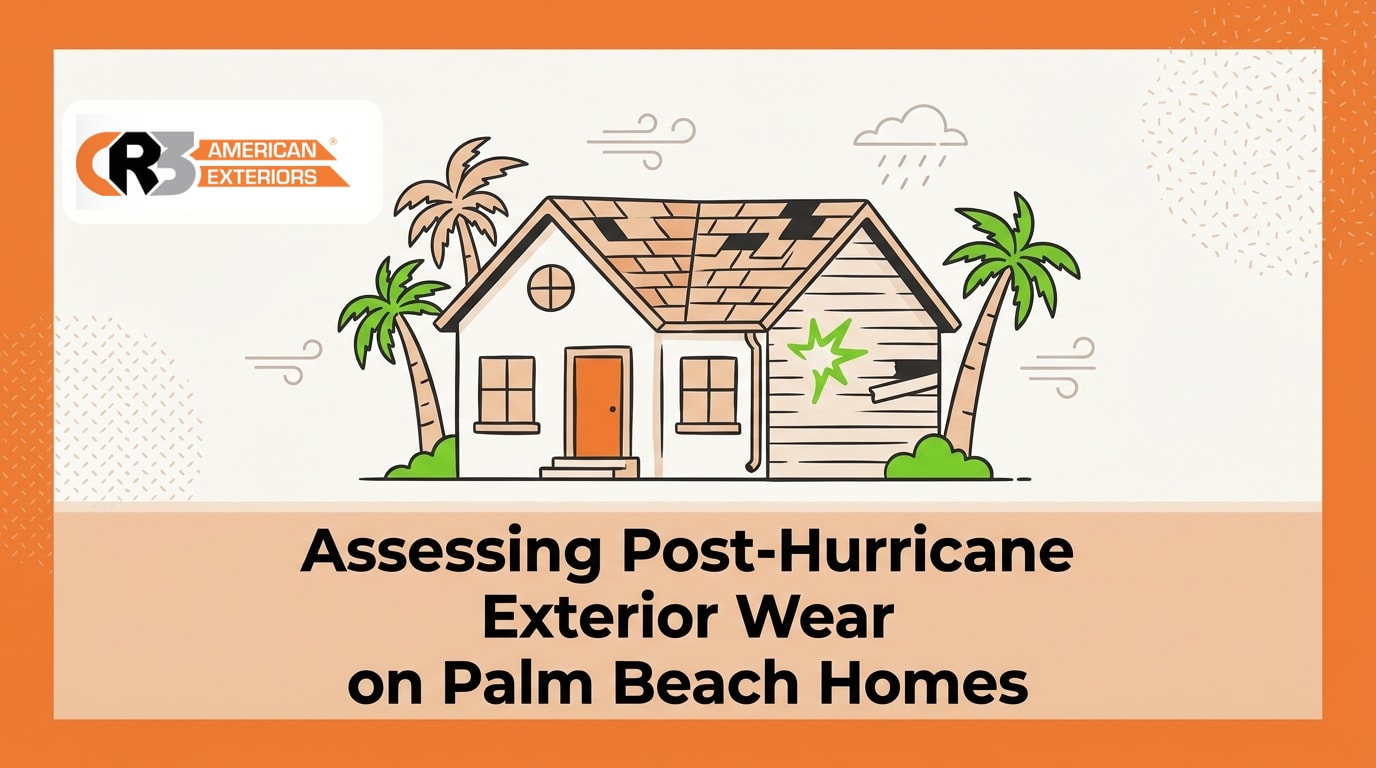
Assessing Post-Hurricane Exterior Wear on Palm Beach Homes
Nov 20, 2026
The Hidden Toll of Coastal Weather on Your Home’s Exterior
You survived another intense Atlantic hurricane season, but while your roof is still attached and your windows are intact, you might be wondering if your house actually escaped unscathed. If you are researching home exterior repair in Palm Beach FL, our team at CR3 American Exteriors knows you are likely dealing with the unseen aftermath of months of high winds, intense UV rays, and driving rain. The most dangerous hurricane damage in Palm Beach coastal and inland homes isn’t always catastrophic destruction—it is the subtle, hidden compromises to the exterior envelope that homeowners often overlook.
As we transition into November and the official end of the Atlantic hurricane season, South Florida moves from its punishing wet season into a drier, milder winter. This seasonal shift creates the optimal window to evaluate your property. Identifying minor exterior vulnerabilities now prevents major structural issues later. The core decision you face is determining if post-storm exterior wear is purely cosmetic, or if it requires a licensed professional assessment before hidden moisture causes structural rot during the dry season.
Unseen wind-driven rain intrusion and the micro-lifting of roof shingles are incredibly common after tropical weather. Water finds the path of least resistance, often traveling behind siding or soaking into vulnerable fascia boards long before you see a water stain on your interior ceiling. This guide will walk you through the visual assessments necessary to understand coastal wear and tear, helping you protect your property’s structural integrity.
How Salt Air and High UV Indexes Degrade Cladding
Living near the ocean offers incredible benefits, but the coastal environment is undeniably hostile to building materials. Salt spray does not just stay on the beach; it travels miles inland on the ocean breeze and settles heavily on your exterior walls. Over time, this accelerates the breakdown of protective finishes on almost every type of siding.
South Florida’s notoriously high UV index compounds the problem. Standard vinyl siding and non-elastomeric exterior coatings simply cannot handle the constant bombardment of solar radiation. The sun bakes the protective resins out of the paint and siding materials, leading to severe fading, chalking, and eventually cracking. When the material cracks, it loses its ability to repel water, opening the door for the next wave of humid, salty air to penetrate deeper into the home’s shell.
This combination of tropical coastal humidity, airborne salt, and intense sun exposure creates a highly corrosive micro-climate right against your exterior walls. In our experience, standard inland exterior materials often fail prematurely in Palm Beach because they are not engineered to withstand this continuous chemical and thermal assault.
The Science of Salt Air Corrosion
Understanding why your home’s exterior degrades requires a quick look at the science of salt. Salt particles are hydrophilic, meaning they actively attract moisture from the humid air.
The corrosive cycle:
- Moisture attraction: Salt dust settles on your paint and pulls humidity out of the air, creating a constant damp, salty layer on the wall.
- Chemical breakdown: This briny film slowly eats through standard exterior paint, sealants, and caulking, breaking the chemical bonds of the materials.
- Material failure: Once the sealant fails, the underlying stucco, wood, or fiber cement is exposed directly to the elements.
Because of this relentless cycle, specialized coastal-grade coatings and highly durable cladding materials are required to withstand the local environment.
| Environmental Factor | Inland Impact | Palm Beach Coastal Impact |
|---|---|---|
| Airborne Salt | Negligible | High concentration; creates corrosive damp film on all surfaces. |
| UV Exposure | Moderate fading over decades | Rapid fading, chalking, and cracking of non-elastomeric paints. |
| Wind-Driven Rain | Occasional during severe storms | Frequent and sustained during the six-month hurricane season. |
Spotting Vulnerabilities in Stucco, Siding, and Fascia
Catching moisture intrusion points early is the single best way to protect your home. In our years of restoring South Florida properties, our team consistently sees specific cladding types show distinct signs of stress after a rough storm season. Knowing what to look for allows you to act before moisture penetrates the structural envelope of the house.
Visual signs of exterior stress:
- Stucco hairline cracking: Stucco is rigid, and when a house shifts during high winds, the stucco often develops hairline cracks. While small, these cracks pull in water during heavy rains.
- Efflorescence on walls: If you see white, powdery deposits on your stucco or brickwork, that is efflorescence. It indicates that water has gotten behind the surface, dissolved the natural salts in the masonry, and pushed them out as the water evaporated.
- Warping and rattling siding: Wind damage on siding panels often looks like warping, loose seams, or panels that rattle loosely when you press on them. High winds can stretch the nailing slots on vinyl or aluminum siding, compromising the entire wall system.
- Soft spots in wood: Wood rot in fascia and soffits is incredibly common after wind-driven rain forces water up under the roofline. Discolored, peeling, or spongy wood trim means water is actively decaying the material.
By late fall, at the end of the Atlantic hurricane season, these symptoms are usually visible if you know where to look. Ignoring a rattling siding panel or a small patch of efflorescence often leads to hidden mold growth and rotted wall studs by the time the next rainy season arrives.
The Crucial Link Between Roof Integrity and Gutter Performance
Your home’s exterior health is a holistic system. Siding, gutters, and roofing do not operate independently; a failing roof or a clogged gutter directly impacts the siding and the foundation below it. When evaluating post-storm wear, you have to look at how these systems interact.
During our post-storm evaluations, a pattern we see often is how high winds cause the micro-lifting of roof shingles. The wind catches the edge of the shingle, lifting it just enough to force water underneath and into the underlayment. While the shingle might lay flat again after the storm passes, the water is already trapped. That trapped water gravity-feeds down the roof deck, eventually rotting out the fascia boards at the roofline.
Gutters play an equally important role in this ecosystem. Overflowing or salt-corroded gutters spill heavy sheets of water directly onto vulnerable fascia boards, stucco walls, and window frames. Instead of directing water safely away from the foundation, a failing gutter system turns a moderate rainstorm into a concentrated waterfall against your home’s cladding.
If you notice water stains running down your siding or pooling near your foundation, the root cause is rarely the siding itself. Often, these visual signs of siding water damage trace back to potential roof or gutter failures above. If you are already noticing issues at the roofline, addressing roofing problems near the ocean is the first step to stopping the cascade of water damage down the side of your house.
Corrosion Concerns: Fasteners, Flashings, and Florida Building Codes
The strength of your exterior cladding is entirely dependent on the hardware holding it together. In a coastal environment, the structural hardware fails much faster than the cladding itself if the wrong materials are used.
Salt air accelerates corrosion on non-galvanized fasteners significantly faster than in inland areas. If a contractor used standard steel nails to secure your siding, soffits, or trim, the salt air will eventually rust the nail heads completely off. Once the fastener fails, the next strong wind gust can easily rip the cladding right off the house.
Metal flashing is another highly vulnerable component. Flashing is the thin metal material installed around windows, doors, chimneys, and roof valleys to direct water away from critical seams. When flashing corrodes from salt exposure, it develops pinhole leaks. These tiny leaks allow wind-driven rain to bypass your siding and enter the wall cavity.
This is exactly why the Florida Building Code has incredibly strict requirements for wind resistance and material standards in exterior cladding. The code dictates specific uplift resistance ratings and requires corrosion-resistant fasteners in coastal zones. We always remind our clients that utilizing proper, code-compliant materials is not just about passing an inspection; it is the only way to ensure long-term home protection against the relentless Palm Beach climate.
Your Post-Hurricane Season Exterior Checklist
Taking a proactive approach in November can save you significant headaches later. Perform this visual inspection on a clear day, but remember: strictly avoid DIY repairs on ladders or roofs. Prioritize your safety and leave elevated inspections and structural repairs to licensed contractors.
- Walk the perimeter: Slowly walk the entire perimeter of your home. Look for debris impact marks on the stucco, missing siding panels, or trim that has pulled away from the wall.
- Check the roofline from the ground: Stand back from the house and visually scan the roofline. Look for lifted or missing shingles, and check if the gutters are sagging or pulling away from the fascia board.
- Inspect caulking and seals: Closely examine the caulking around all exterior windows and doors. Look for shrinkage, cracking, or gaps where the sealant has pulled away from the frame.
- Look for moisture retention: Check the base of your exterior walls for green algae growth or persistent dampness, which indicates poor drainage or failing gutters above.
- Document with photos: If you spot any areas of concern, take clear, well-lit photos. These are incredibly helpful to share with a licensed professional when you call for an evaluation.

Why Coastal Homes Require Professional Exterior Diagnostics
When you spot damage during your post-storm walkaround, the temptation is often to hire a local handyman to patch the stucco or caulk a leaking window. However, piecemeal fixes rarely address the underlying systemic moisture issues. A patch might hide the symptom, but if water is entering from a lifted roof shingle or a corroded piece of flashing, the wood framing beneath will continue to rot.
A comprehensive, professional exterior evaluation looks past the surface. Licensed exterior specialists understand coastal building science. They know how to trace a water stain on your siding back to its origin point on the roof. They understand the specific interactions between South Florida’s humidity, salt air, and building materials, ensuring that repairs are done with code-compliant, corrosion-resistant hardware.
Working with contractors who value transparent, honest evaluations gives you confidence when dealing with complex exterior systems. At CR3 American Exteriors, we operate on a core value of honesty, backing our work with our comprehensive workmanship guarantee. This commitment ensures that homeowners seeking reliable coastal exterior repairs get straightforward diagnostics and high-quality craftsmanship, rather than quick fixes that fail during the next storm season.
Frequently Asked Questions About Coastal Exterior Maintenance
What is considered exterior home maintenance?
Exterior home maintenance involves the routine upkeep of your home’s outer shell to prevent weather damage and structural decay. This includes routine cleaning of cladding and gutters to remove salt and debris. It also involves inspecting and replacing degraded caulking and weatherstripping around doors and windows. Regularly monitoring the roof, siding, and foundation for signs of wear or moisture intrusion is the foundation of good maintenance.
How do you fix rotted wood on the outside of a house?
Rotted wood must be completely removed and replaced; it can never just be painted over or filled with standard putty. Before replacing the wood, the source of the moisture—often a failing gutter, degraded caulking, or a roof leak—must be identified and permanently resolved. The replacement should utilize treated, moisture-resistant materials and corrosion-resistant fasteners installed by a licensed professional to meet coastal building codes.
Who do I call to fix the outside of my house?
You should look for a licensed exterior specialist or a dedicated roofing and siding contractor. It is highly recommended to ensure they have specific, verifiable experience with coastal building codes and salt-resistant materials. Avoid calling general handymen for structural repairs, weatherproofing, or roofing work, as these require specific licensing and deep knowledge of exterior water management.
How often should a Palm Beach home get an exterior inspection?
Ideally, a coastal home should be inspected twice a year: once in the spring before hurricane season begins, and once in November after the season ends. This schedule ensures your home is fortified before the severe weather hits and allows you to catch hidden storm damage before the dry winter season. You should also schedule an immediate inspection following any major tropical storm or direct hurricane impact.
Does salt air really damage exterior paint that quickly?
Yes, salt is highly corrosive and hydrophilic, meaning it actively attracts and holds water against your home’s surfaces. Without regular fresh-water rinsing and the application of proper elastomeric coatings, salt air can significantly reduce the lifespan of standard exterior paints. The combination of salt crystals expanding in the microscopic pores of the paint and constant moisture leads to rapid chalking, peeling, and failure.
Protecting Your Home for the Seasons Ahead
Addressing November wear and tear before the dry season fully sets in is the most effective way to protect your property’s value and structural health. Taking a proactive approach allows you to schedule professional assessments on your terms, rather than waiting for reactive emergency repairs when a hidden leak suddenly damages your interior drywall.
If you have completed your visual checklist and spotted signs of wind damage, stucco cracking, or roofline issues, now is the time to act. For homeowners looking into home exterior repair in Palm Beach FL, securing a thorough, licensed evaluation from our team ensures your property remains safe, dry, and ready for whatever the coastal climate brings next.